Bolsonaro’s son stuns Lula in first round of Brazilian presidential election

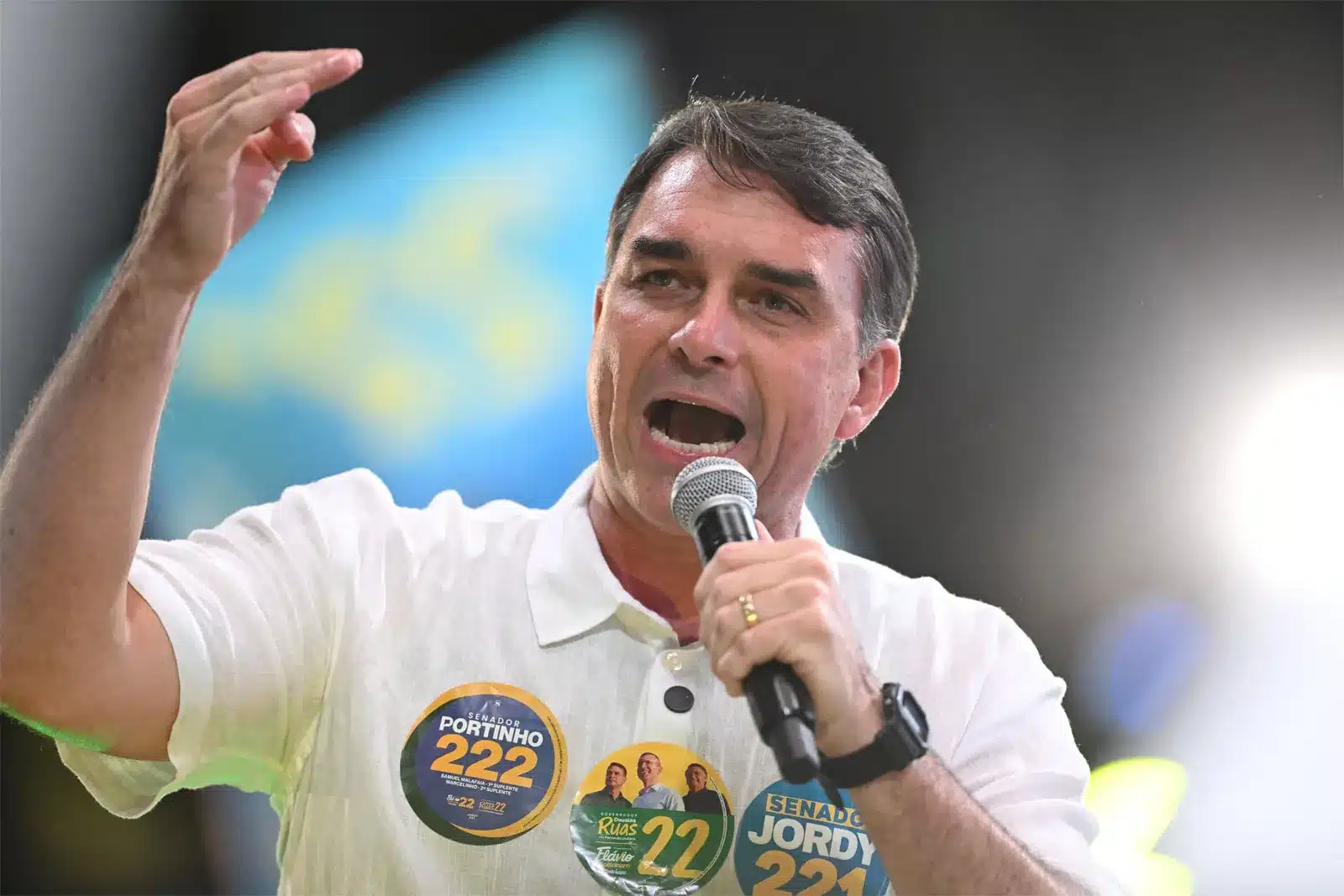
Senator Flávio Bolsonaro secured a surprise victory over Brazilian President Luiz Inácio Lula da Silva in the first round of the country’s presidential election, setting the stage for a tense runoff on October 25.
Bolsonaro, the 45-year-old son of former President Jair Bolsonaro, captured 47.03% of valid votes in Sunday’s contest, outpacing the left-wing incumbent’s 45.16%, according to the Superior Electoral Court. With 99.99% of ballots counted early Monday, Bolsonaro amassed 56.1 mn votes, approximately 2.2 mn more than Lula.
Because neither candidate achieved the outright majority required to win in the first round, the top two finishers advance to a runoff. The result is a significant setback for the 80-year-old Lula, whose opinion polls had projected to maintain a narrow lead over his conservative challenger.
Celebrating in Brasília, Bolsonaro framed his first-round success as a clear mandate for change. He told reporters and supporters that the election results signalled the end of the Workers’ Party era in Brazil.
Lula acknowledged the unexpected deficit but vowed to contest the second round vigorously.
The Bolsonaro political legacy
Flávio Bolsonaro is a lawyer and Rio de Janeiro state representative who currently serves in the federal Senate. A member of the right-wing Liberal Party, he is mounting his first presidential campaign alongside running mate Alfredo Gaspar.
His political platform heavily relies on the conservative movement that his father cultivated while governing the South American nation from 2019 to 2022. Jair Bolsonaro narrowly lost his 2022 re-election bid to Lula, and authorities later convicted him of plotting a coup to overturn those results. He is currently serving a 27-year prison sentence under house arrest.
The younger Bolsonaro has integrated his father’s potential release and political rehabilitation into his campaign strategy. He also targets moderate conservatives and voters frustrated with Lula’s current term. His platform prioritises public security, reduced government spending and closer economic alignment with Washington, promising to forge stronger agreements with US President Donald Trump regarding critical minerals.
Lula’s path to the runoff
Lula is seeking a fourth non-consecutive term. A former trade union leader who became Brazil’s first working-class president in 2002, he governed until 2010 before returning to power in 2023.
His current campaign highlights social welfare initiatives, economic support for lower-income families and the protection of democratic institutions. While his administration points to improvements in employment and inequality, critics have focused on rising living costs, mounting household debt and public security concerns.
Reuters reported that Brazil’s public debt has climbed past 82% of its gross domestic product, with government forecasts predicting economic growth of 2% in 2026 and 2.3% in 2027.
The October 25 runoff will largely depend on voters who supported eliminated candidates. Author Augusto Cury, who finished third with about 3.4 million votes, declined to endorse either front-runner. Ronaldo Caiado and Renan Santos, who collectively drew 5.3 million votes, also intend to remain neutral.