World Bank lifts Uzbekistan’s GDP forecast as Central Asia slows


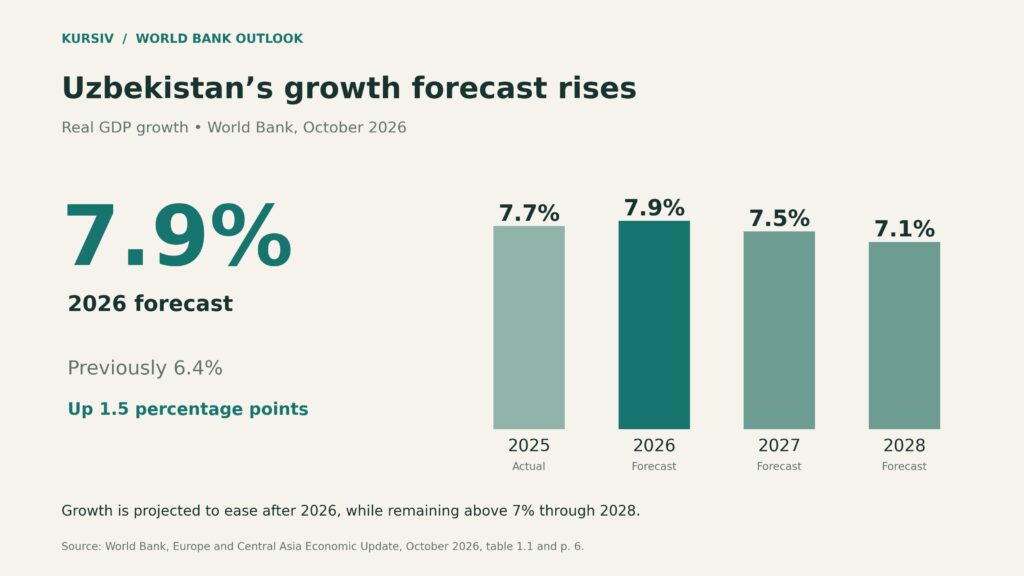
The World Bank has lifted its forecast for Uzbekistan’s economic growth to 7.9% in 2026, up from 6.4%, due to stronger household demand, rising incomes and investment. The upgrade puts the country among the fastest-growing economies in the Bank’s Europe and Central Asia region, where growth is broadly weakening.
The new projection, published in its October economic update, is 1.5 percentage points above the previous forecast. It would also mark a modest acceleration from Uzbekistan’s 7.7% expansion in 2025.
The Bank attributes the improvement to wage growth outpacing inflation, employment gains, robust remittances and investment in infrastructure, energy and housing.
The World Bank singled out both household spending and major projects as sustaining activity. Money sent home by workers abroad supports consumption, while foreign capital helps finance energy, digital infrastructure and industrial development.
What is supporting growth?
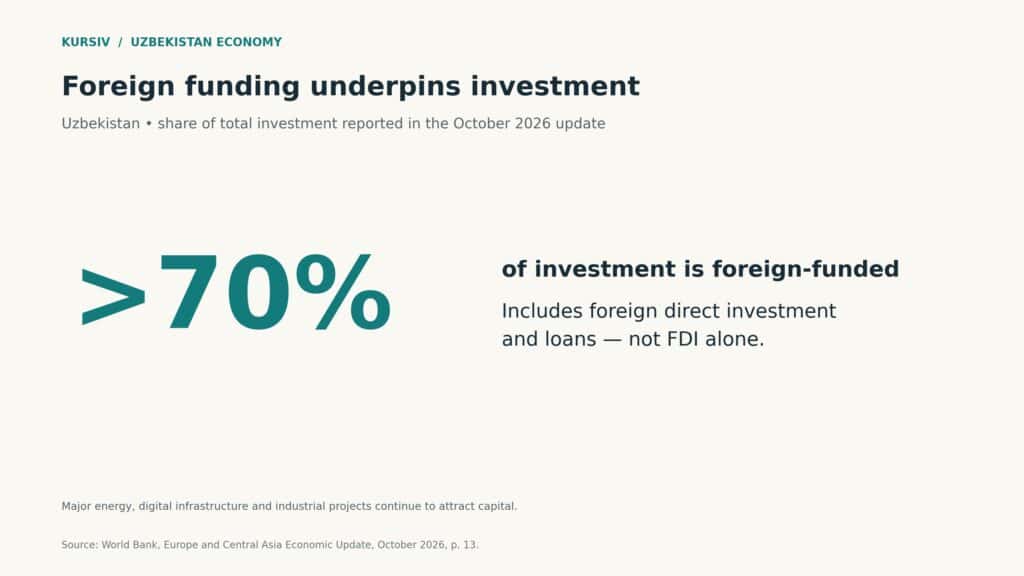
The report states that over 70% of investment in Uzbekistan is foreign funded, including direct investment and loans. This figure is gross of borrowing and should not be interpreted as the proportion financed solely by foreign direct investment.
The Bank expects growth to ease gradually while remaining strong:
Read more: Uzbekistan’s investment reaches $28.4 billion in the first half of 2026
| Year | Real GDP growth |
| 2025 | 7.7% |
| 2026 forecast | 7.9% |
| 2027 forecast | 7.5% |
| 2028 forecast | 7.1% |
Read more: Uzbekistan’s labour migration spreads beyond Russia
Contrast with the wider Central Asia region
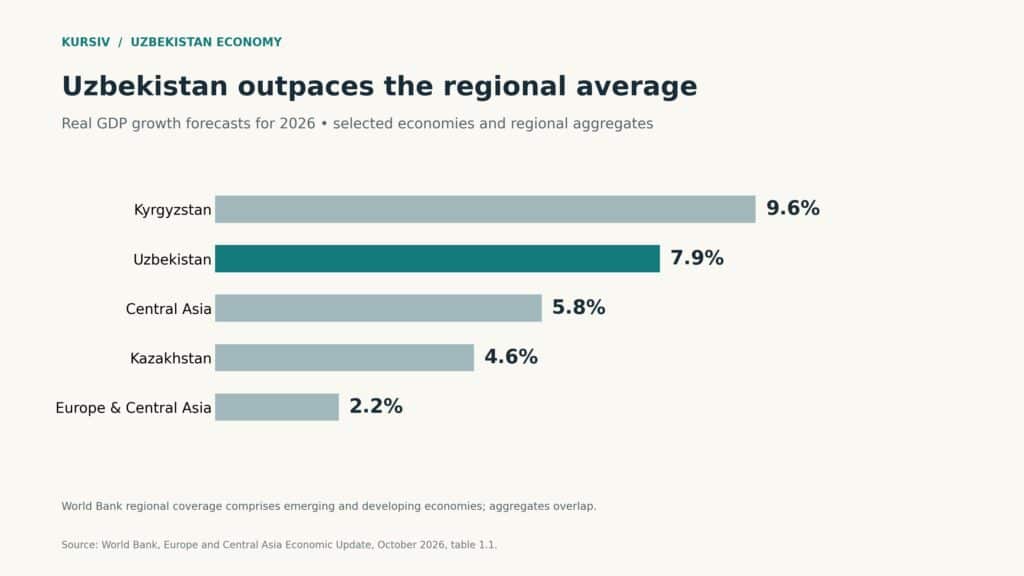
The Bank projected growth of 2.2% across Europe and Central Asia, down from 2.6% last year. Central Asia remains its fastest-growing subregion at 5.8%, with Kyrgyzstan forecast to expand by 9.6% and Kazakhstan by 4.6%.
Uzbekistan’s fiscal deficit is expected to remain broadly unchanged at 2.2% of GDP. The report says that stronger revenues, lower energy subsidies and reduced directed lending to state-owned enterprises should offset higher social and investment spending.
The stronger forecast nevertheless faces external risks. Renewed conflict-related disruption could raise energy, freight, food and fertiliser costs, while weaker trading partners or tighter international financing could weigh on demand and investment.