Uzbekistan becomes world’s third-largest gold buyer amid surging mining costs

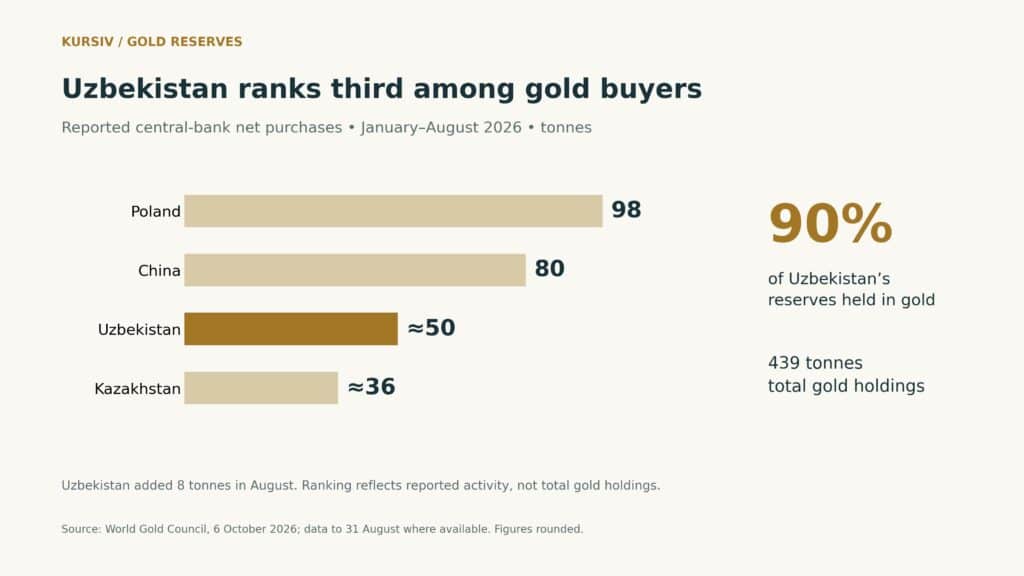
Uzbekistan was the world’s third-largest reported central bank gold buyer from January to August 2026, adding nearly 50 tonnes. Gold now accounts for 90% of its international reserves.
The country’s Central Bank bought eight tonnes in August, taking its holdings to about 439 tonnes, according to the World Gold Council’s October 6 update.
Only Poland and China reported larger net purchases over the eight months, with 98 and 80 tonnes, respectively. Kazakhstan followed Uzbekistan with about 36 tonnes. The ranking considers reported purchases rather than the size of a country’s gold holdings.
Central banks were net buyers of 39 tonnes worldwide in August. Demand in the market remained focused on countries with longer-term reserve accumulation programmes, the council said.
The 90% share for Uzbekistan means that swings in the price of gold can have a large effect on the dollar value of reserves, even if the amount held does not change.
Read more: Uzbekistan’s gold exports jumped 32% in 2025
Buying more gold, paying more to produce it
A separate review by Kept consultancy showed the pressures facing gold producers. Central-bank purchases and mine output are separate measures, but together the reports illustrate gold’s significance to Uzbekistan as both a reserve asset and an industry.
The Navoi Mining and Metallurgical Company (NMMC) raised production 2.1% to 3.157 million ounces in 2025, while reported output declined at Newmont and Barrick.
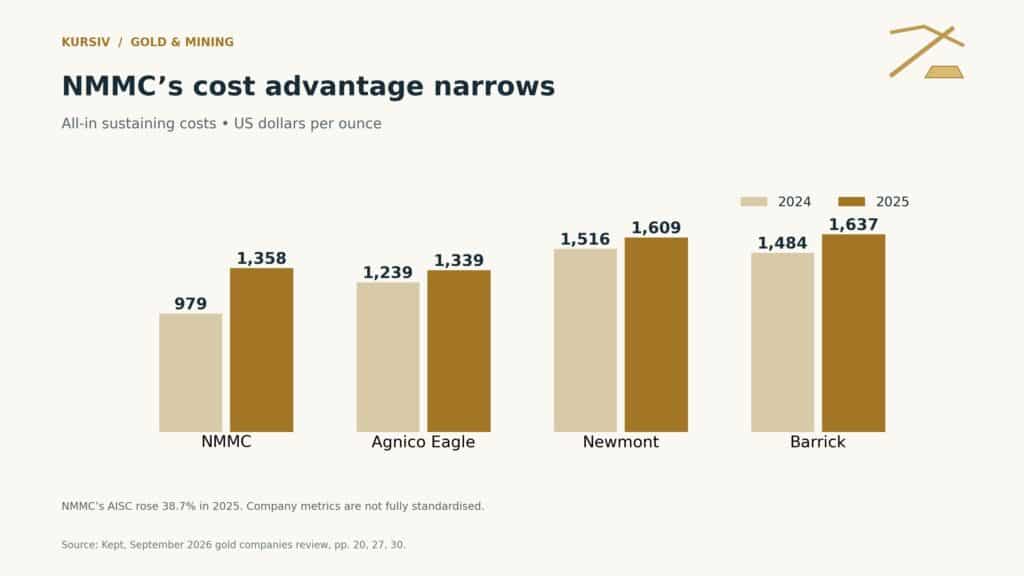
Yet NMMC’s all-in sustaining cost — which covers production and spending to maintain operations — rose 38.7% to $1,358 an ounce. Kept attributes the increase to higher gold-price-linked royalties, more material excavated and inflation in consumables.
NMMC remained below Newmont and Barrick on this cost measure, but moved slightly above Agnico Eagle. Differences in reporting and mine portfolios limit direct efficiency comparisons.
Read more: Uzbekistan identifies major copper and gold reserves
Higher prices nevertheless cushioned the industry. In Kept’s North American sample, the gap between the reference gold price and sustaining costs roughly doubled in 2025, despite costs rising.