International law advocate Navi Pillay wins 2026 Nobel Peace Prize

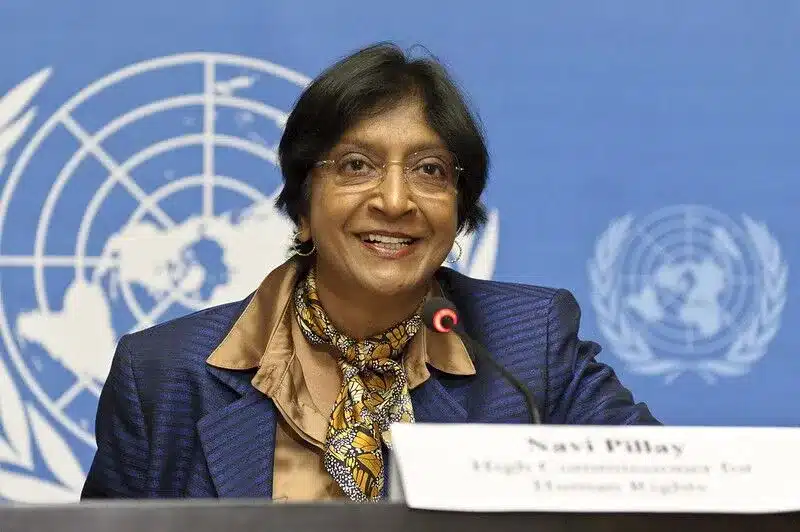
Navanethem «Navi» Pillay, the South African former UN human rights chief whose legal career spanned apartheid and international genocide trials, has won the 2026 Nobel Peace Prize.
Pillay, 85, served as UN High Commissioner for Human Rights from 2008 to 2014. Before that, she was a judge at the International Criminal Court and president of the UN tribunal established to prosecute those responsible for the Rwanda genocide, according to her UN biography.
One of her most consequential contributions came in 1998, when she was among the judges who convicted former Rwandan mayor Jean-Paul Akayesu. The landmark ruling established that rape could constitute genocide when committed with the intention of destroying a protected group.
The Norwegian Nobel Committee credited Pillay as one of the most distinguished defenders of international legal principles in our time. She «has held states and national leaders accountable and brought hope to victims of violence and conflict,» the committee wrote.
BREAKING NEWS The Norwegian Nobel Committee has decided to award the 2026 #NobelPeacePrize to Navanethem «Navi» Pillay for her efforts to promote peace and international law. #NobelPrize https://t.co/97vurspw6z
— The Nobel Prize (@NobelPrize) October 9, 2026
Read more: Anne Carson wins the 2026 Nobel Prize in Literature
Who is Navi Pillay?
Born in Durban in 1941, Pillay grew up under apartheid and built a legal career despite racial and gender discrimination. She represented political prisoners and anti-apartheid activists before becoming the first non-white woman to serve as a judge on South Africa’s High Court.
Her work subsequently took her into international criminal justice. Following the Akayesu judgement, she said the tribunal wanted to «send out a strong message that rape is no longer a trophy of war», according to the United Nations.
Newly awarded peace laureate Navi Pillay has held states and national leaders accountable and brought hope to victims of violence and conflict. Navi Pillay is one of the great defenders of international legal principles in our time. Her distinguished career reminds us of the need to support, fortify and expand the global rule of law. Navi Pillay’s commitment to justice and human dignity is a source of hope and inspiration to all who seek to bring about a more peaceful world. Read more about the 2026 #NobelPeacePrize: https://t.co/JMjpp1jPKc #NobelPrize
— The Nobel Prize (@NobelPrize) October 9, 2026
Ahead of Friday’s announcement, publicly discussed contenders included Sudan’s Emergency Response Rooms, Ukrainian child-rescue advocate Mykola Kuleba, Save the Children and the Committee to Protect Journalists. Those names featured in the Peace Research Institute Oslo’s independent recommendations, which were not an official shortlist.
The Nobel Committee received 287 nominations this year, including 208 individuals and 79 organisations. It does not disclose nominees’ identities for 50 years.
Read more: What Kagan and Soai’s Nobel-winning chemistry discoveries mean
The 2026 prize carries 12 million Swedish kronor, following an increase announced by the Nobel Foundation in September.