Azerbaijan’s school hijab protests lead to 37 arrests as tensions rise

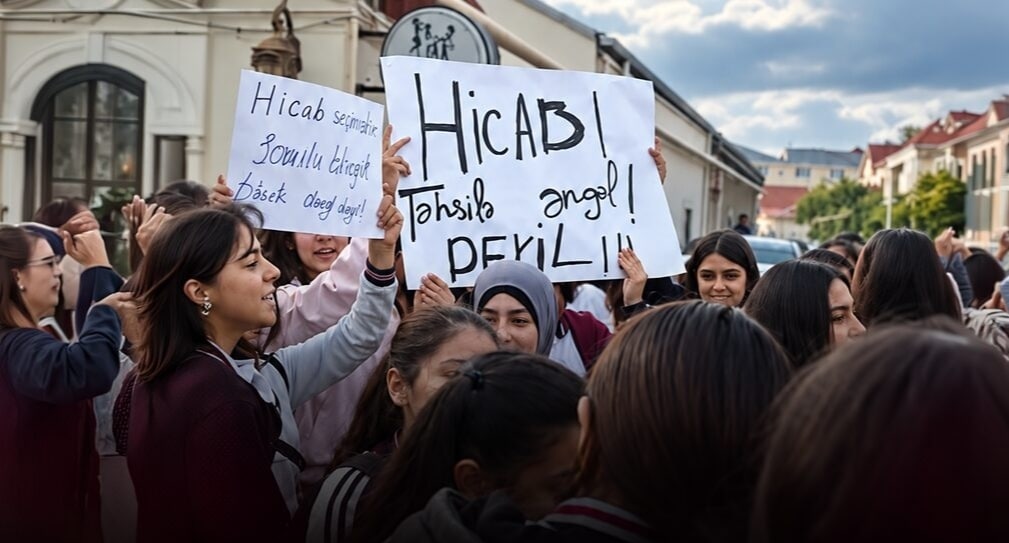
Azerbaijani police have arrested 37 people following protests against new school dress regulations that have reportedly prevented girls wearing hijabs from attending classes.
The unrest intensified on October 12, with demonstrations reported in Baku and other parts of Azerbaijan. Students and parents gathered outside schools demanding that girls wearing Islamic headscarves be allowed to continue their education.
Anger is growing in Azerbaijan after girls wearing hijabs were barred from schools under new uniform rules. Students and teachers have staged demonstrations, while dozens have reportedly been arrested and users report disruptions to social media platforms. https://t.co/3OQU4UjoPW
— Al Jazeera English (@AJEnglish) October 12, 2026
According to Azerbaijani news agency APA, the Interior Ministry accused some demonstrators of confronting school employees, damaging educational facilities and disrupting traffic.
Authorities opened a criminal investigation into actions allegedly disturbing public order. The ministry has not established that all those arrested were involved in violence.
Videos show schoolchildren protesting outside schools and boycotting classes after reports that a new ‘secular’ dress code recently introduced by the Azerbaijani government has led to hijab-wearing pupils and teachers being barred from school. https://t.co/JlT8GWj8mA
— Al Jazeera English (@AJEnglish) October 10, 2026
Videos circulating on social media show pupils protesting outside schools, while others reportedly boycotted classes in solidarity with classmates who were denied entry.
What sparked Azerbaijan’s hijab protests?
The controversy began after Azerbaijan’s Cabinet of Ministers approved amendments to school uniform requirements on September 21.
The regulations prohibit clothing that undermines uniformity or contradicts the secular nature of public education. Although the document does not explicitly mention hijabs, parents and students say some schools have interpreted it as a ban on religious headscarves.
Similar dress requirements for teachers took effect on October 6.
It’s not just students even teachers wearing hijab face barriers to entering schools in Azerbaijan. https://t.co/W4m29DC70d
— Alireza Akbari (@itsalireza_akb) October 13, 2026
Azerbaijani lawmaker Sevinj Fataliyeva defended the uniform requirements, arguing that schools should provide a neutral environment where children are not divided by religion or social background.
On October 12, education authorities began monitoring compliance with the new rules, including inspections of students’ uniforms and teachers’ clothing.