Indonesia drops 2.4 tonnes of dry ice to combat severe wildfire haze

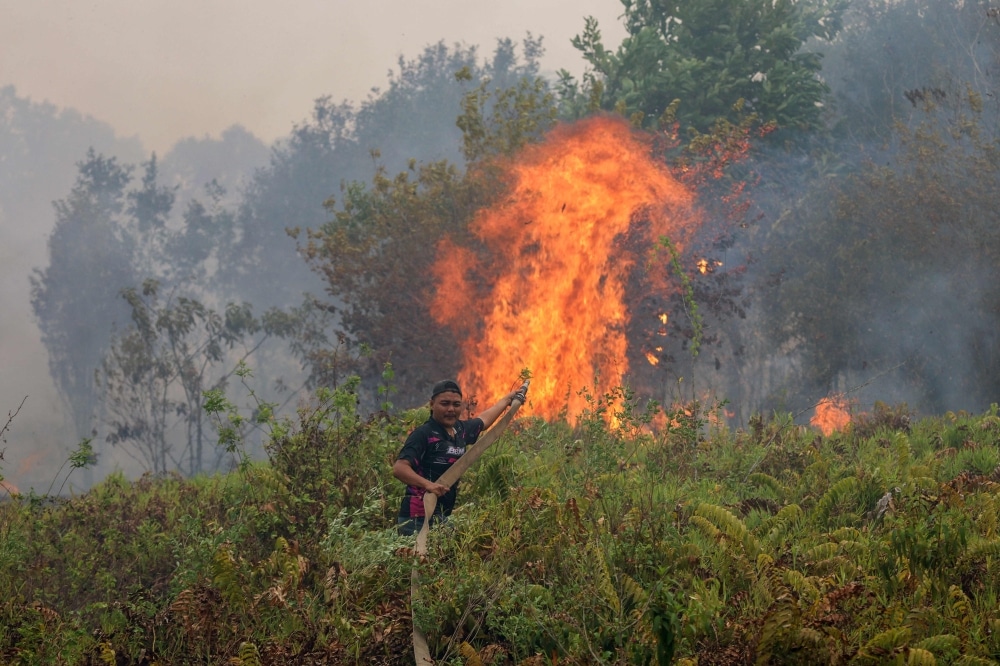
Indonesia has dropped 2.4 tonnes of dry ice over South Sumatra in an experimental attempt to disperse thick smoke from forest and peatland fires that have disrupted flights and caused widespread air pollution across Southeast Asia.
The operation took place on October 15–16, with three flights lasting a combined seven hours and three minutes, according to Indonesia’s National Disaster Management Agency (BNPB).
The initial flights targeted areas surrounding Sultan Mahmud Badaruddin II International Airport in Palembang, where poor visibility had affected aviation.
Visibility improved from approximately 1,000 metres to as much as 3,000 metres during the operation, BNPB official Berton Panjaitan said on October 17.
However, authorities cautioned that further research was needed to establish whether the improvement resulted from the dry ice or changing weather conditions.
How does dry ice help clear wildfire smoke?
Unlike conventional cloud seeding, which generally aims to encourage rainfall, the Indonesian experiment uses dry ice, or solid carbon dioxide, to disrupt atmospheric conditions that trap smoke near the ground.
The technique targets temperature inversions, which occur when a layer of warmer air prevents cooler air and pollutants below it from rising.
By weakening these conditions, authorities hope to allow smoke to disperse more easily and improve visibility.
South Sumatra is the first Indonesian province selected to test the method. The government will evaluate the results before deciding whether to extend it to other fire-affected regions.
The province recorded 189 high-confidence fire hotspots as of October 16 and is one of six priority areas for wildfire prevention and emergency response.
Indonesia battles its worst fire season in a decade
The experiment comes as Indonesia struggles with its most severe wildfire season since 2015, worsened by prolonged drought and intense El Niño conditions.
According to Reuters, environmental groups estimate that between 637,000 and 900,000 hectares of land have burned across the country in 2026.
Smoke has spread into neighbouring Malaysia and Singapore, contributing to school closures, flight disruptions and deteriorating air quality. Indonesian health authorities have recorded more than 283,000 respiratory illness cases across seven affected provinces.
President Prabowo Subianto has ordered additional firefighting resources, while Indonesia has deployed more than 60,000 personnel and 50 aircraft to combat the fires.
On October 16, the government also signalled its willingness to accept foreign assistance after previously declining offers from neighbouring countries.
Alongside dry ice, Indonesian authorities are testing fire-suppressing substances, including a cassava-based mixture and a Portuguese-developed gel designed to slow the spread of flames.