
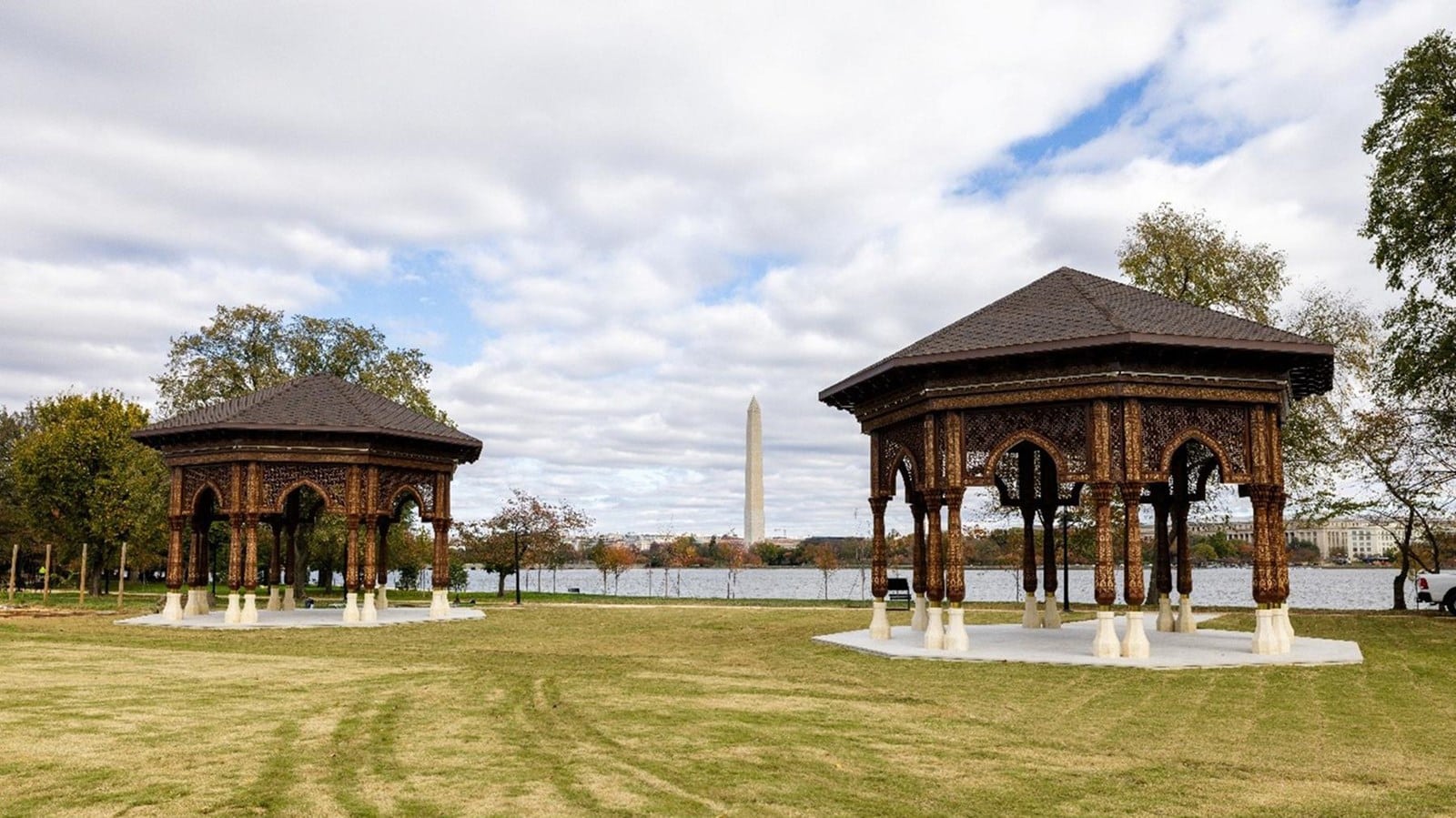
Two traditional Uzbek gazebos, known as ‘ayvans’, have been installed in Washington‘s West Potomac Park as a gift from President Shavkat Mirziyoyev to US President Donald Trump and the American people, the US National Park Service confirmed.
The gift marks the 250th anniversary of American independence and Uzbekistan’s 35th anniversary. Built by Uzbek craftsmen from approximately 200-year-old mountain walnut trees, the gazebos feature carved wooden columns, traditional patterns and LED lighting.
Why are ayvans important in Uzbekistan?
An ayvan is an open-sided, roofed terrace or pavilion, usually found in a courtyard or garden. It is an essential part of traditional Uzbek homes, providing shade during hot summers and a place where families gather for meals, drink tea and welcome guests.
People often sit on a tapchan, a raised wooden platform covered with cushions, which serves as both a dining and relaxation space.
Ayvans are also a familiar feature of historical buildings and official venues. The Imam Bukhari complex in Samarkand, for example, features a large ayvan supported by 154 columns.
Similar outdoor gazebos also serve in diplomatic settings, including Uzbekistan’s presidential residences, where they receive foreign dignitaries.
Uzbekistan’s Ambassador to the US, Furqat Sidiqov, said the Washington gazebos could become a gathering place for Uzbek Americans, hosting cultural celebrations and community events.
The new ayvans stand near Washington’s National Mall and the Washington Monument, accessible to residents and tourists.
