NASA Reveals Artemis III Crew for Lunar Lander Docking Tests

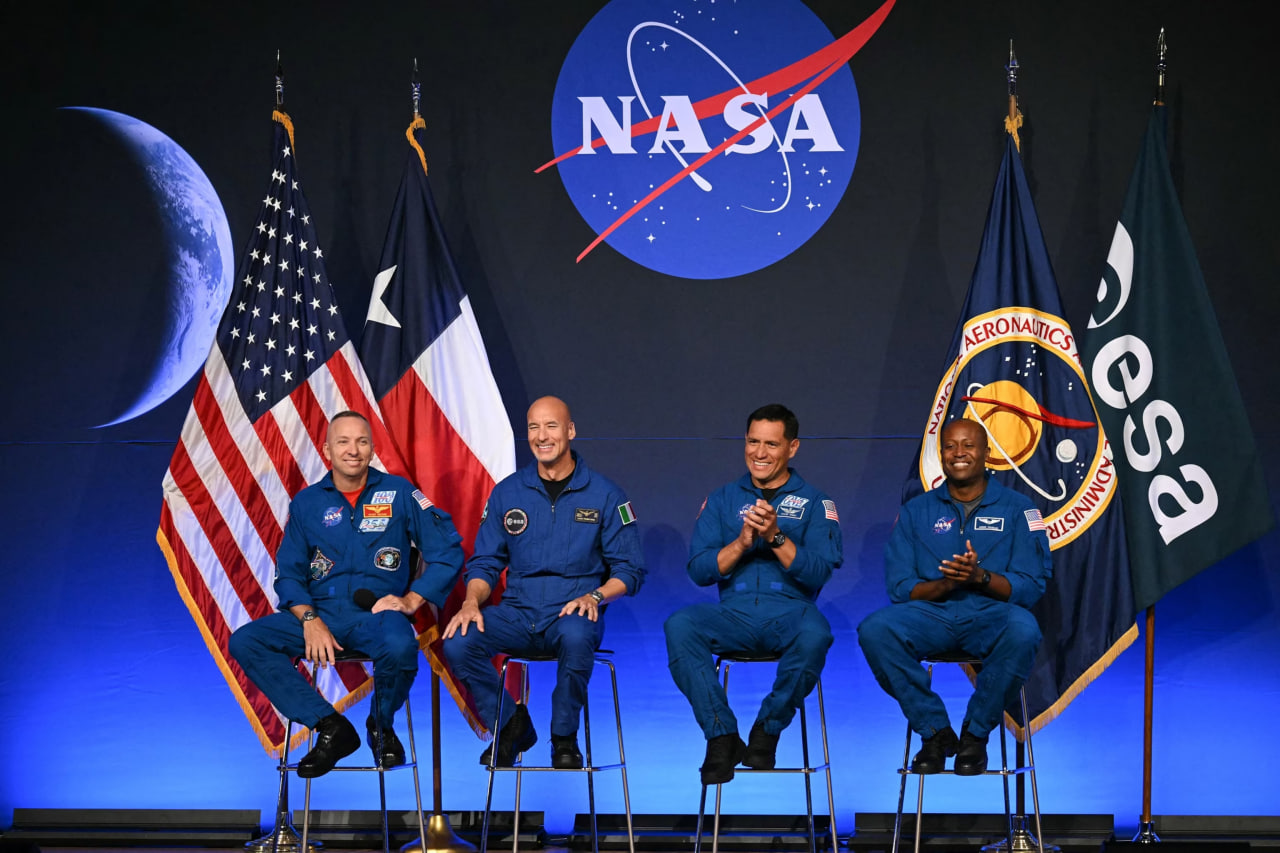
NASA has unveiled the four-man crew tasked with executing the Artemis III mission. Rather than heading to the moon, the late 2027 flight will serve as a complex dress rehearsal in low-Earth orbit to test competing lunar hardware developed by Elon Musk’s SpaceX and Jeff Bezos’ Blue Origin.
NASA Administrator Jared Isaacman announced the roster during a special presentation in Houston on Tuesday. The high-profile crew blends extensive experience with fresh faces and international collaboration.
The Artemis III Crew:
- Randy Bresnik (Mission Commander): A 58-year-old former test pilot and veteran of three previous spaceflights.
- Andre Douglas: A first-time space traveller representing the US.
- Frank Rubio: An American astronaut who holds the US record for the longest single spaceflight.
- Luca Parmitano: A veteran European Space Agency (ESA) astronaut from Italy.
A low-Earth dress rehearsal
Faced with mounting pressure from China’s ambition to land a crew on the moon by 2030, NASA has adapted its timeline. Artemis III will no longer touch down on the lunar surface. Instead, it acts as a critical proving ground for the technology needed to achieve a crewed landing by 2028.
Jeremy Parsons, NASA’s Artemis programme manager, warned that the operation will be an incredibly complicated multi-launch campaign.
The two-week mission requires a delicate sequence of orbital manoeuvres:
- Blue Origin’s Blue Moon lander will launch into low-Earth orbit.
- The four astronauts will blast off inside the Orion capsule atop NASA’s Space Launch System.
- Orion will dock with Blue Moon for 48 hours to allow the crew to run technical diagnostics.
- Blue Moon will detach, allowing SpaceX’s Starship to link up with Orion for a final 24-hour testing period before the crew returns to Earth.
The billionaire space race hurdles
The decision to transform Artemis III into a docking demonstration stems directly from severe manufacturing delays at both commercial spaceflight companies. Last year, SpaceX and Blue Origin pitched accelerated testing timelines that forced NASA to entirely restructure its upcoming flight schedule.
Both companies still face immense logistical hurdles to meet the 2027 launch window. While SpaceX recently managed a successful test of its upgraded Starship rocket, Blue Origin is currently managing the fallout of a major disaster.
Last month, Blue Origin’s New Glenn rocket exploded on a Florida launchpad. The blast obliterated the company’s primary launch facility and grounded the exact rocket model slated to carry the Blue Moon lander into orbit. Despite the catastrophic setback, Blue Origin’s lunar chief John Couluris insisted the company is making excellent progress in its investigation. Both he and NASA officials remain confident that the New Glenn rocket will be rebuilt and operational by the end of the year.
A geopolitical olive branch
The inclusion of Italian astronaut Luca Parmitano is widely viewed as a diplomatic manoeuvre to mend fractured international relations.
Earlier this year, Isaacman abruptly cancelled the «Gateway» project, a planned space station that would have orbited the moon, in favour of funnelling funds directly into a permanent lunar surface base. The sudden cancellation infuriated key allies including the ESA, Canada and Japan who had already invested years into building Gateway components.
To smooth over the diplomatic rift, NASA quickly brokered an exclusive partnership with Italy to help construct the new surface base. Teodoro Valente, President of the Italian Space Agency, celebrated Parmitano’s assignment as a move that solidifies Europe’s crucial role in human space exploration.