Foreign Investors and Uzbekistan: Expectations, Risks, and Signals

In 2025, foreign shareholders were present in approximately half of Uzbekistan’s joint-stock companies and held securities worth around $1 bn in nominal value. They are increasingly studying the country amid growing interest in Central Asia.
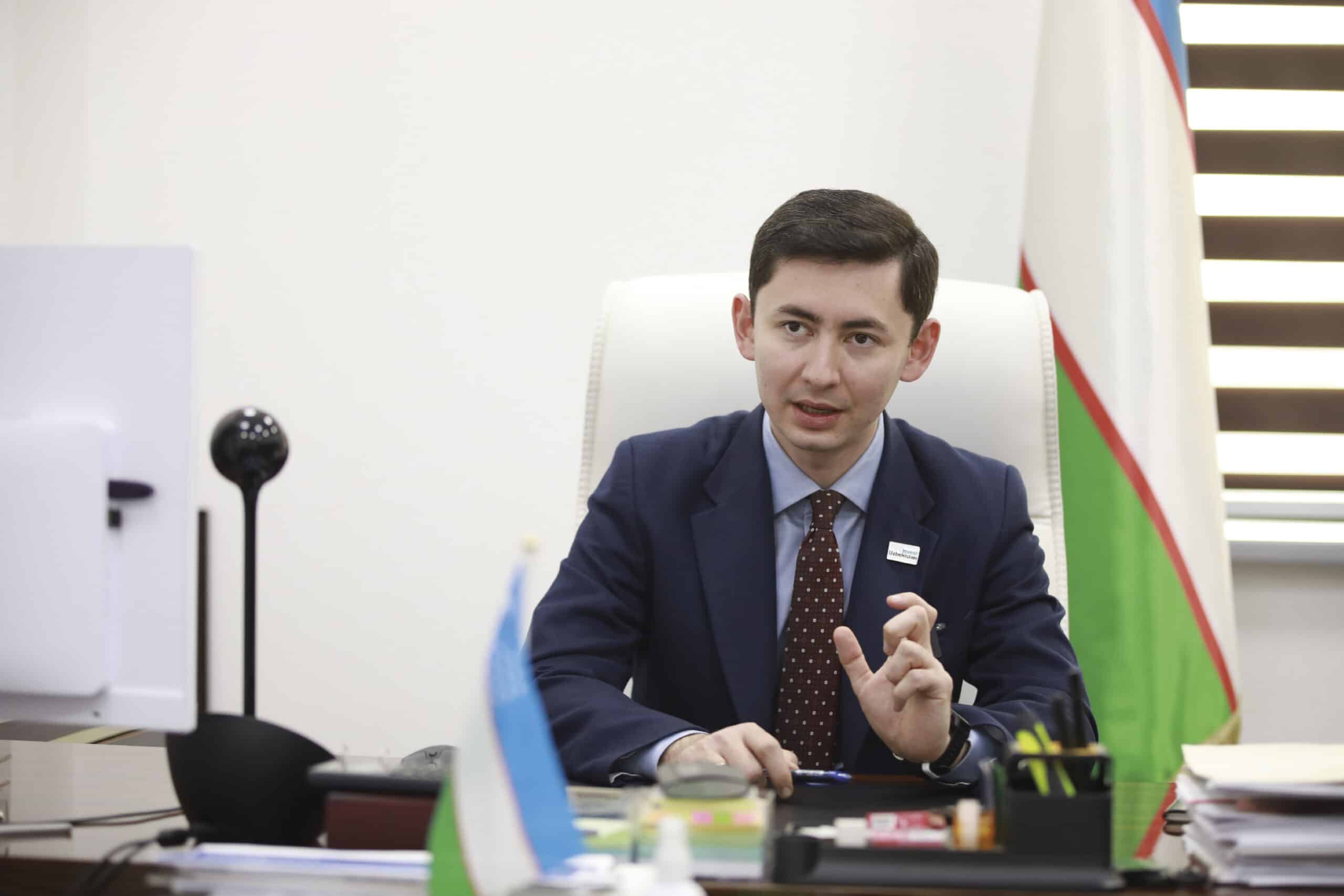
At the same time, most foreign players are taking a wait-and-see approach toward the domestic capital market. To discuss which instruments are already functioning in Uzbekistan, what investors expect next, and which signals remain decisive for them, Kursiv Research spoke with Mansurjon Rasulov, Acting Director of the Agency for Attracting Foreign Investments under the Ministry of Investment, Industry and Trade of the Republic of Uzbekistan.
— Mr. Rasulov, you communicate frequently with foreign investors. How is trust in Uzbekistan’s market being built today, and what role do state institutions play in this process?
— In 2019, when our agency was established, we were assigned a total of 28 tasks. However, if I were to summarise them, the main goal is to facilitate, support, and accompany foreign investors. A simple example: when we travel to a foreign country we have never visited before, everything is new to us. We do not know how processes are organised there.
The same applies to foreign investors entering a new market — they have many questions and need support. At this stage, our agency serves as a one-stop shop, primarily for greenfield and brownfield investors. We help them understand which key legislative acts they need to study, what the procedures are for registering a legal entity, obtaining licences and certificates, and, in general, how to enter the market.
But the most important thing, and something that has been delivering increasingly positive results recently, is matchmaking. We connect foreign investors with local partners because they possess market expertise, assets, and operating businesses. For a foreign investor, it is very convenient to begin operations alongside a local partner.
After launch, challenges inevitably arise, barriers, delays in obtaining public services, and administrative procedures. This is where we support investors who have already entered the market. This is important because they have significant potential to expand their activities.
We see examples of investors entering one sector and then investing in other, unrelated industries, expanding their portfolios. They can do this relatively quickly because they are already present in the market, unlike those who may require three or four years to decide whether to invest in Uzbekistan.
— How do foreign investors perceive Uzbekistan’s capital market, and what are the most common requests they bring to you?
— Investors do not look only at individual countries; they look at the region as a whole. Central Asia currently attracts considerable interest. If we look at the five countries of the region, only Kazakhstan entered the international capital market relatively early, and many of its most attractive assets are already available to institutional investors.
There are currently few expectations regarding major new IPOs from Kazakhstan, and attention is gradually shifting toward Uzbekistan. Foreign players want exposure to Central Asia amid global instability, trade wars, conflicts, and overheated markets. Investors are looking for new, more predictable markets, a kind of «safe haven» where they can allocate part of their portfolios to diversify risks. Since 2017–2018, Uzbekistan has demonstrated a clear policy direction and predictable economic growth, and this trend can be extrapolated over a three-to-five-year horizon.
The main question and interest from investors is: when? This is because Uzbekistan has already proven in practice that it offers attractive opportunities for investors.
All investments that have entered the country since the beginning of the reform process have delivered success stories. However, investors who focus specifically on capital markets and securities still do not have the ability to invest in Uzbekistan remotely in order to gain exposure to economic growth and market liquidity. As a result, they are taking a wait-and-see approach.
— You mentioned a shift in focus toward Asia. What are Uzbekistan’s competitive advantages compared with other emerging markets in the region?
— The main advantage is a diversified economy. For example, unlike Kazakhstan and Azerbaijan, we are not heavily dependent on the oil and gas sector. We have a diversified investment portfolio and a broad range of partners, from Russia and China to the European Union and the Gulf countries.
In addition, we have a young and qualified population, access to raw materials, and potential within value-added chains. The market opened relatively recently, and many opportunities are only beginning to be realised.
— Which segments of the capital market attract the greatest interest from foreign investors — equities, corporate bonds, government securities, Eurobonds, or IPOs? Why these particular instruments?
— If we speak about where Uzbekistan is already represented in the global capital market, it is through corporate bonds issued by both state-owned and private companies in the form of Eurobonds. Several billion dollars’ worth of bonds have already been placed on the London Stock Exchange.
This is very important because it creates a track record for institutional investors and equity investors. Familiarity with Uzbekistan through the corporate bond market creates the foundation for IPOs. Therefore, I see two main categories — corporate bonds and IPOs. These are currently shaping both interest in and understanding of the market.
— Tell us about the sectors of the economy that are of greatest interest to foreign investors.
— I would broadly divide them into two categories. The first category consists of private companies — home-grown businesses that started as small or medium-sized enterprises and have now reached a stage where they may enter the capital market in the short to medium term. The second category consists of state-owned companies.
Here there are several key objectives: improving corporate governance and preparing for IPOs, as well as privatisation and reducing the state’s share in the economy. However, in my view, the most exciting potential lies within the private sector. Private companies can expand beyond the country’s borders, become regional players, and eventually access international capital markets such as London, New York, and Hong Kong.
At present, there are no such companies representing Central Asia, either in Kazakhstan or Uzbekistan, but the potential is very significant. Time will show which company and which sector will become the first. It is inevitable.
— Investor interest is often closely tied to sovereign ratings. Fitch and S&P upgraded Uzbekistan’s rating to BB. In your opinion, what steps are necessary for the country to achieve investment-grade status within the next three to five years?
— This question should be viewed from two perspectives. First, rating agencies do not change ratings quickly. Even when significant progress is achieved, they generally upgrade ratings by only one notch per year. Second, the country must continue the reform path launched in 2017–2018. The more historical data and stable trends there are, the easier it becomes for rating agency analysts to forecast future growth.
What comes first? Without question, improving corporate governance, implementing IFRS standards, and increasing transparency. These are precisely the issues rating agencies focus on in their assessments. Many companies in Uzbekistan have already adopted IFRS, but there is still a long way to go, including broader implementation of these standards.
— What concerns do foreign investors most frequently encounter when entering Uzbekistan’s market?
— For greenfield and brownfield investors, the main concern is whether their business model will work in Uzbekistan. Approaches to doing business differ, for example, between the European Union and Uzbekistan.
That is why we try not to rush investors but instead help them gain a deeper understanding of value chains, sales markets and consumer behaviour. Questions about labour also arise, but they are usually resolved through a combination of expatriates and local staff. Over time, the share of expatriates decreases.
If we are talking about the capital market, the concerns are more standard — macroeconomic stability, exchange rates, and profit repatriation. We emphasise every time that there are no restrictions on repatriation, but some investors still remember the previous foreign-exchange regulatory system.
— Looking at the next stage of development, how prepared is Uzbekistan’s market for the arrival of major institutional investors?
— Overall, it is ready. There are projects and industries capable of absorbing long-term investment. Businesses in Uzbekistan are eagerly awaiting access to long-term and affordable capital that institutional investors can provide. The main obstacle remains the lack of direct market access. Investors often have to establish a legal entity in Uzbekistan, which does not always fit their investment model. The emergence of funds or instruments listed on international markets would significantly simplify access.
— Which changes in the capital market are likely to become turning points for foreign capital in the coming years?
— First and foremost, the first IPOs and dual listings. The first successful IPO from Uzbekistan will become a benchmark and a model for other companies. For businesses, an initial public offering will cease to be an abstract concept and become a clear mechanism for raising capital.
In addition, foreign investors will gain an instrument for investing in Uzbekistan through the capital market without requiring a physical presence. This will attract a fundamentally new category of investment and influence corporate governance, transparency, and ESG standards. It is important that access to international markets be accompanied by high-quality promotion and increased investor awareness.
We must continuously inform foreign investors about developments in Uzbekistan so that interest remains sustainable and long-term.
Note: After this interview was recorded, Mansurjon Rasulov moved to the position of Head of Funding and Investor Relations at TBC Uzbekistan.