U.S. and Iran Agree to Final Peace Roadmap Despite Rising Tensions

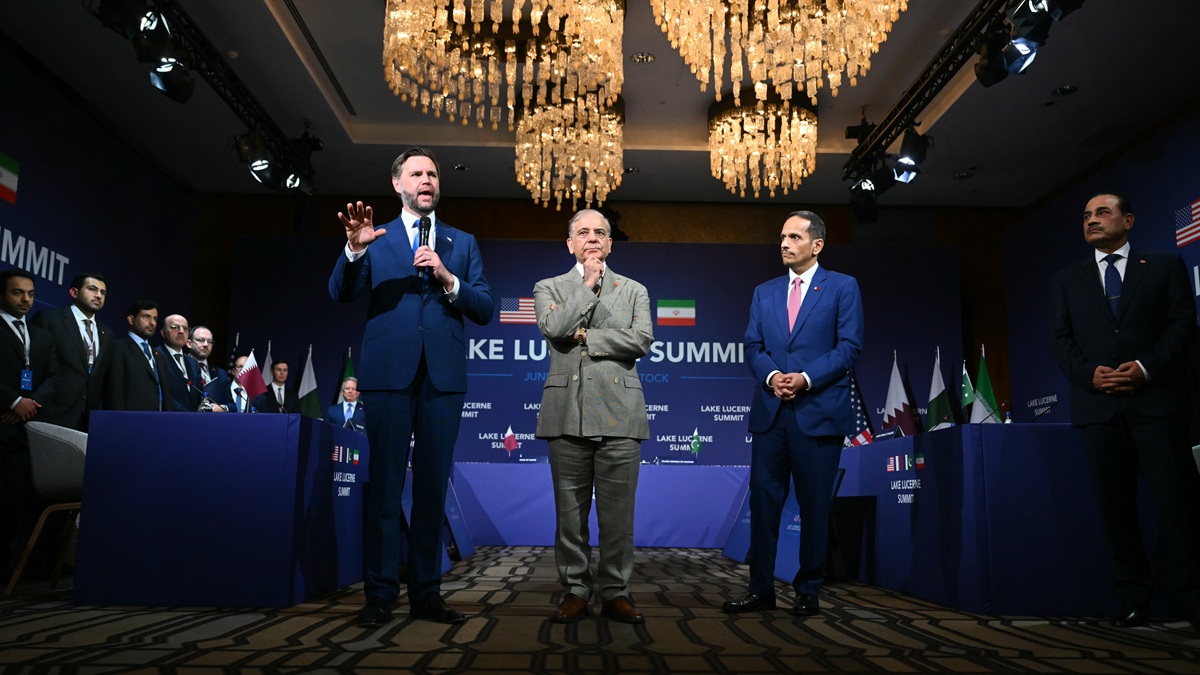
The United States and Iran have agreed to draft a roadmap towards a definitive peace accord following their first round of negotiations in Switzerland, Reuters reports.
The high-level discussions commenced against a backdrop of renewed geopolitical friction. Iran had recently announced the closure of the strategic Strait of Hormuz, while U.S. President Donald Trump threatened a resumption of military strikes if Tehran persisted in backing its allies in Lebanon. Despite these hostilities, both nations resolved to collaborate on ending the conflict in Lebanon and establishing a dedicated communication channel to prevent shipping disruptions in the Strait of Hormuz.
De-escalation efforts
U.S. Vice President JD Vance and Iranian delegates met to discuss the execution of a memorandum of understanding signed last week. The agreement effectively extends the current ceasefire for at least an additional 60 days.
Iranian Foreign Minister Abbas Araghchi stated that Tehran had secured critical concessions, including sanctions relief on oil and petrochemical exports. The package also encompasses the partial unfreezing of overseas Iranian assets and the initiation of a domestic economic recovery programme.
Conflicting accounts
The negotiations were marked by contrasting accounts regarding the diplomacy on the ground. Iranian state media claimed that their delegation refused to re-enter the negotiating room following President Trump’s public threats, choosing instead to communicate indirectly through intermediaries from Qatar and Pakistan.
However, American officials strongly denied these claims. A diplomat involved in the process informed Reuters that the Iranian representatives remained at the negotiating table until late into the night. The discussions covered complex issues including the nuclear programme, the situation in Lebanon, maritime safety in the Hormuz Strait and the practical mechanisms of the new memorandum.
Amid the initial diplomatic uncertainty surrounding the talks, global energy markets reacted sharply on Monday. Brent crude oil prices climbed by more than a dollar, reaching $81.66 per barrel.