Uncertainty is the New Normal: Uzbekistan Central Bank Chief Urges Policy Overhaul at Tashkent Forum

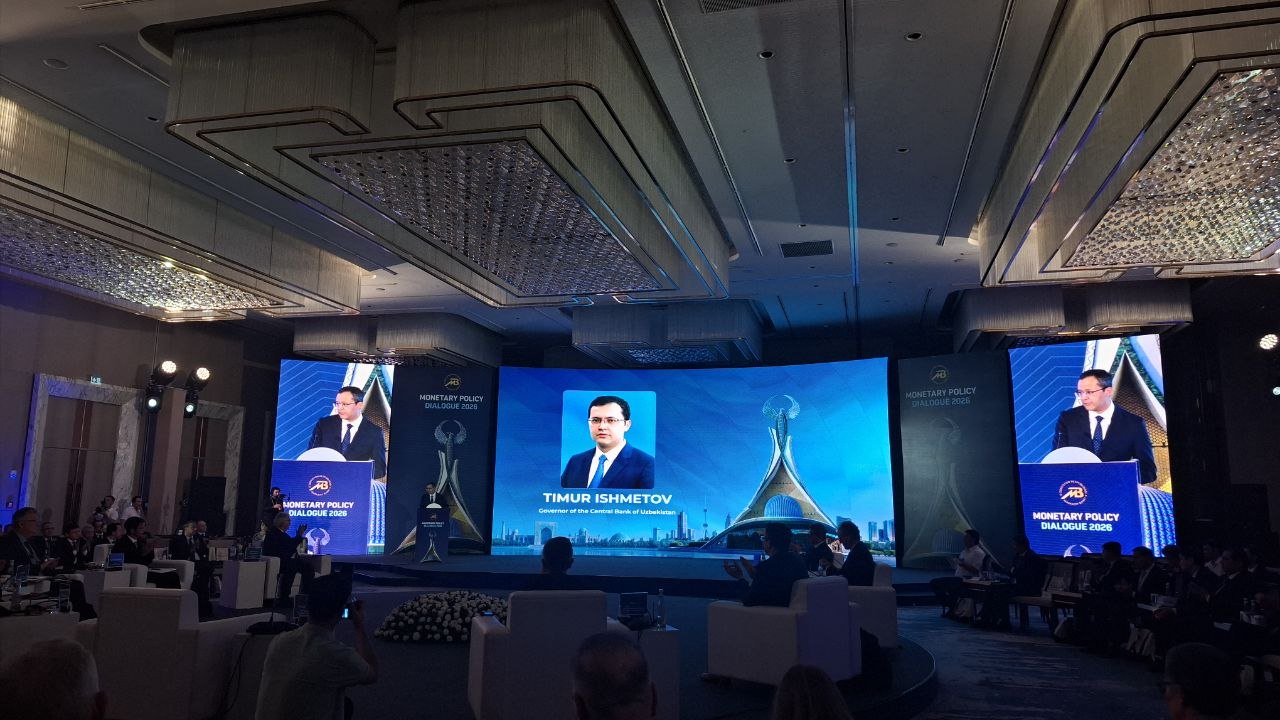
The global economy is grappling with an extended period of overlapping shocks that require financial regulators to completely rebuild their analytical models and planning strategies. This was the stark warning delivered by Timur Ishmetov, Governor of the Central Bank of Uzbekistan, during his opening address at the international Monetary Policy Dialogue 2026 forum in Tashkent on June 29.
Providing context to the current global financial climate, Ishmetov noted that the years following the onset of the pandemic have severely disrupted traditional understandings of inflation. Rather than experiencing isolated economic shocks, the world is currently navigating a complex web of intertwined crises. These range from disrupted supply chains and energy shortages to the fragmentation of global trade and severe turbulence within labour markets.
«The deeper lesson is this: Uncertainty is no longer the exception we wait out before normal service resumes,» Ishmetov stated. «It has become the condition in which we work. We can no longer treat this as a noise to be set aside. We must build it in our scenarios, our frameworks, in our decisions.»
He argued that central banks can no longer dismiss market volatility as temporary interference. High turbulence must now be integrated into baseline scenarios and decision-making frameworks. According to the governor, any central bank that plans solely for expected outcomes is no longer engaging in serious economic forecasting.
A borderless economy
Ishmetov identified a second fundamental challenge facing modern economies: widespread digitalisation. He stressed that this phenomenon cannot be treated as a standard economic cycle but rather as a profound transformation that is actively restructuring the foundations of the financial sector in real time.
Key indicators of this technological shift include the exponential growth of digital payments, widespread asset tokenisation, the active testing and implementation of central bank digital currencies (CBDCs).
The integration of artificial intelligence into regulatory research and supervision
While acknowledging that digitalisation offers immense opportunities for growth and financial inclusion, the Central Bank chief warned of significant risks to economic stability, consumer protection and cybersecurity.
He urged his peers to maintain a pragmatic perspective rather than blindly embracing new technologies, emphasising that the operational reliability of financial systems must remain the ultimate priority.
Discussing the decision to host the forum in Tashkent, Ishmetov highlighted Uzbekistan’s unique geographical position as the only country sharing borders with all other Central Asian nations.
«Shocks in the region do not respect borders and neither, we believe, should the search for answers,» he concluded, calling for open and honest dialogue amongst the monetary authorities of the region.