Uzbekistan, Kazakhstan Lead Talks on Middle Corridor and Energy Security at CPC London Conference


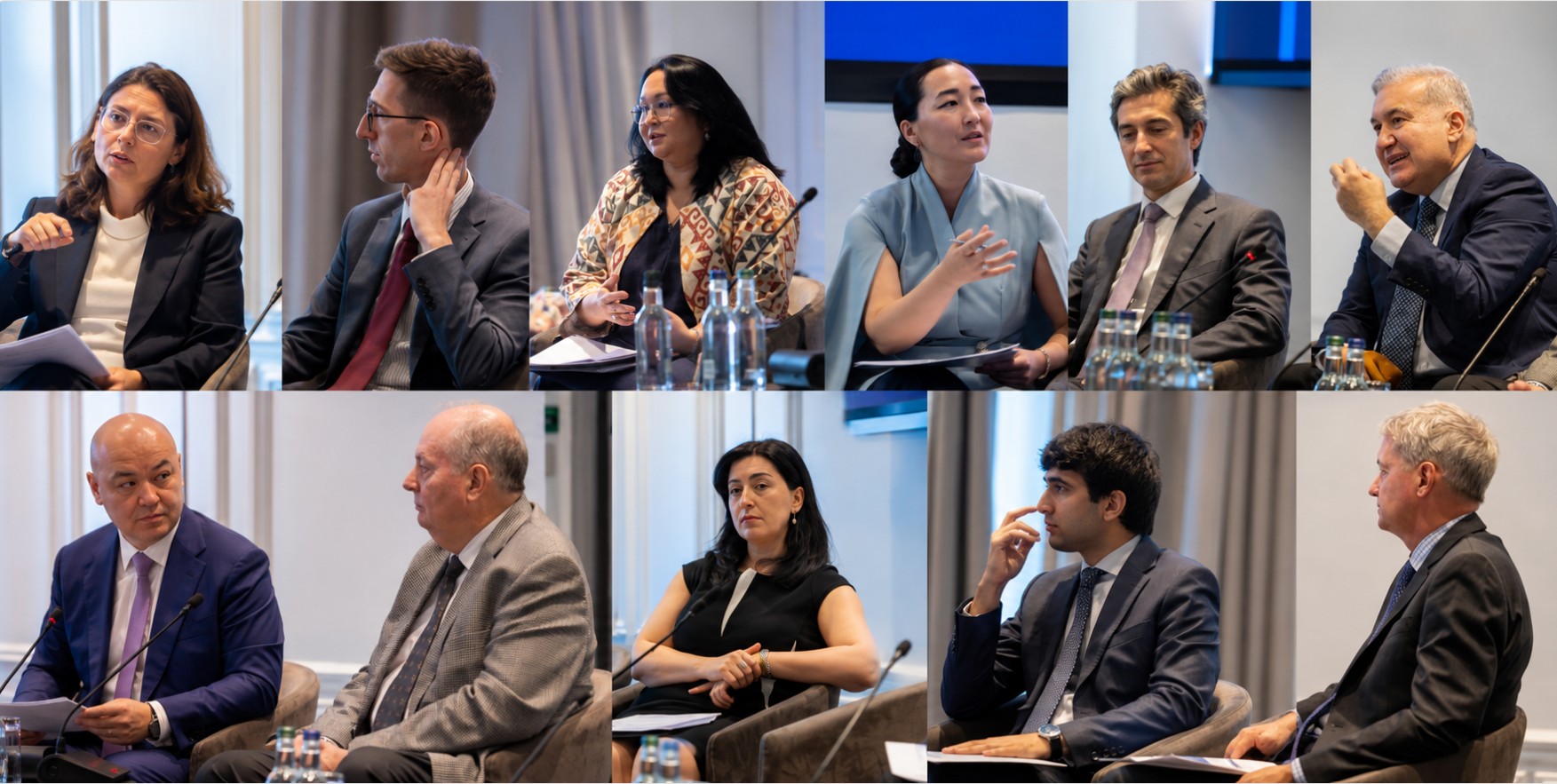
The Middle Corridor, regional connectivity and energy security dominated discussions as policymakers, diplomats, business leaders and financial institutions gathered the 30th of June for the CPC London Summer Conference, with Uzbekistan and Kazakhstan emerging as the central focus of the event.
Infrastructure takes centre stage
Speakers described the Greater Caspian region as an increasingly important strategic and economic hub, highlighting its role in global trade, critical minerals, energy security and sustainable infrastructure. Throughout the conference, participants stressed that stronger regional cooperation will be essential to supporting long-term economic growth and resilience.
Charles Norman, a Territorial Development Consultant, argued that transport infrastructure should create lasting economic benefits rather than simply move freight across borders. Referring to plans to upgrade a single-track railway in Karakalpakstan, Uzbekistan, into a double-track line linked to the Middle Corridor through Kazakhstan, he said investment should generate jobs and attract businesses to the regions it serves.
«I’ve done some work with the World Bank… on how we turn these corridors not into just a conduit for… moving wealth through the countries but actually harnessing some of that,» Norman said.
Tea Melikadze of the European Bank for Reconstruction and Development said the success of the Middle Corridor would ultimately depend less on the amount of infrastructure built and more on how efficiently it operates.
«Ultimately Middle Corridor and any corridor performance is less on the kilometres built,» she said, pointing to border procedures, logistics and operational efficiency as the key measures of success.
Economic growth across Central Asia
Economic growth across Central Asia also featured prominently. Uzbekistan’s Ambassador Ravshan Usmanov highlighted the country’s resilience and expanding regional influence, while Kyrgyzstan’s Chargé d’Affaires, Kumiushai Suiumbaeva, announced that the country had recorded approximately 11% economic growth during the first six months of the year. She also highlighted cooperation with Uzbekistan and Kazakhstan on the Kambar-Ata 1 Hydropower Plant, alongside Kyrgyzstan’s election to the United Nations Security Council and its leadership on mountain sustainability.
Nigar Jafarova‘s, Associate Practice Leader for CIS & CEE, FrontierView, macroeconomic outlook highlighted Kazakhstan’s 4.7% economic growth, confirming its position as the largest economy in Central Asia.
Azerbaijan was presented as maintaining strong public finances, with foreign exchange reserves equivalent to around 120% of external debt, while continuing to diversify through the expansion of its ICT and manufacturing sectors. Energy security remained one of the conference’s defining themes.
Michael Denison, Head of Advisory at BP, described Kazakhstan as an indispensable supplier to international energy markets, arguing that the country’s importance extends well beyond Europe.
«Kazakhstan is a genuine pillar of support for global oil markets,» Denison said, explaining that the country has helped international markets remain stable during periods of geopolitical disruption while continuing to balance export commitments with rising domestic and regional demand.
Investment, finance and infrastructure drive Central Asia’s growth agenda
Investment opportunities across the region were also highlighted. Nick Coleman of Prism discussed mineral exploration projects in Kazakhstan and Uzbekistan, praising the support provided by both governments and their diplomatic missions while identifying SOCAR as a preferred national energy company partner. Alessio Chiesa of Wood & Compan argued that privatisation remains an important driver of foreign investment, citing Coca-Cola’s investment in Azerbaijan as evidence of international confidence. He described Kazakhstan as the region’s most mature investment market, despite its continued reliance on Russian trade routes.
International financial institutions also outlined growing support for the region. The Astana International Financial Centre highlighted its use of English common law to attract global investors and strengthen connectivity across the Trans-Caspian route. The U.S. International Development Finance Corporation emphasised regional coordination to unlock infrastructure investment and develop critical mineral supply chains, while UK Export Finance announced continued backing for major infrastructure, green transition and critical mineral projects, with financing available for up to 22 years.
Climate and water risks shape the regional agenda
Climate resilience was another recurring priority. Norman stressed the importance of incorporating climate change and natural hazard risks into infrastructure planning to create resilient, financeable projects, while Suiumbaeva warned that Central Asia is increasingly facing the consequences of climate change, including glacier melt, floods and rising temperatures.
Several speakers also identified Uzbekistan’s growing water shortages as one of the region’s most significant long-term challenges, with implications for agriculture, energy production and economic development. The conference concluded with a consistent message: the future of Central Asia will depend on stronger regional cooperation, efficient transport links, sustainable investment and resilient infrastructure.
With the Middle Corridor attracting increasing international attention, speakers agreed that Uzbekistan and Kazakhstan are likely to play a leading role in shaping the region’s economic future.
