Vladimir Norov: WAICO gives Uzbekistan leverage in shaping global AI rules

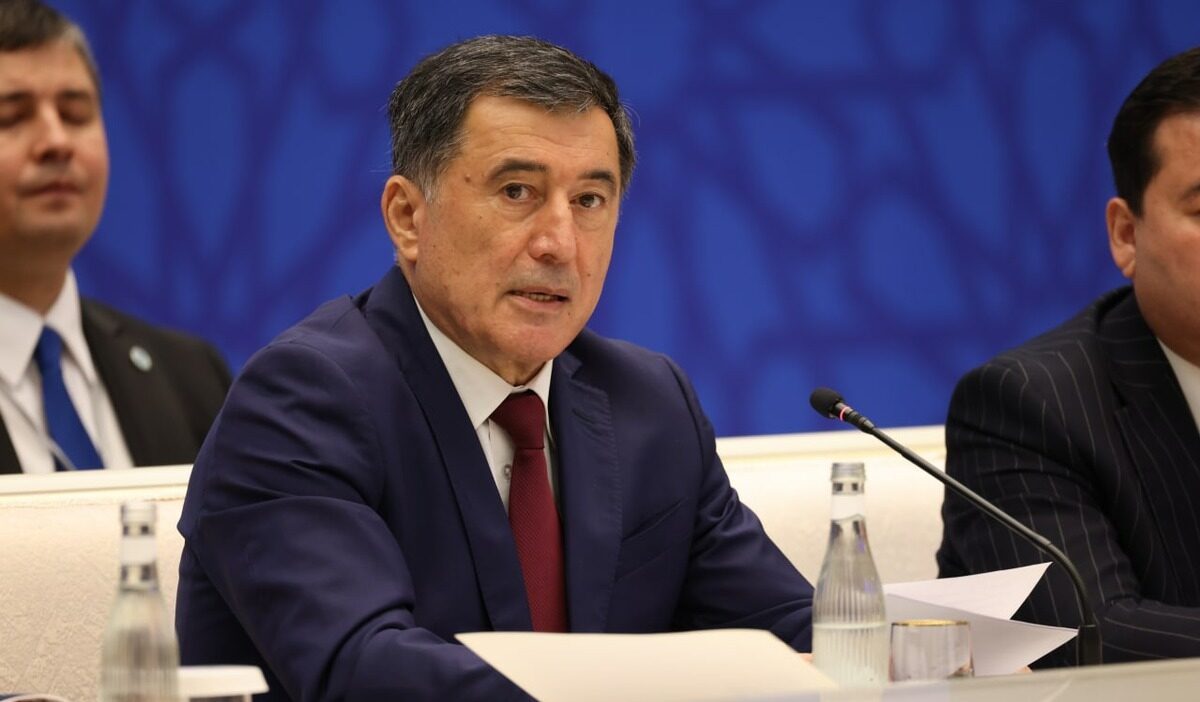
On July 16, 2026, Uzbekistan became one of the 29 founding members of the World Artificial Intelligence Cooperation Organisation (WAICO). Vladimir Norov, the Chairman of the Central Asian AI Association (AICA), discussed in an interview with Kursiv Uzbekistan how this new alliance will enable Central Asia to bridge the technological divide, where the line lies between protecting society and fostering innovation, and why Tashkent must help shape international rules of the game right now.
Mr Norov, as an experienced diplomat and the head of AICA, how do you envision the establishment of WAICO? Can it become an influential aspect of the emerging global AI governance system?
I view the establishment of the World Artificial Intelligence Cooperation Organization (WAICO) as a historic step that marks the transition from technological rivalry to institutional building. The signing of the agreement by 29 states on July 16, 2026, in Shanghai is not just the creation of another structure but the birth of a permanent intergovernmental platform.
Artificial intelligence has ceased to be just a technological innovation; it is becoming a strategic infrastructure comparable to electricity, the internet and space technologies. As AI rapidly transforms the economy, healthcare, education, manufacturing, finance and public administration, the world increasingly realises that no single country can effectively manage its opportunities and risks alone.
Unlike consultative formats, WAICO aims to transform political declarations into practical cooperation mechanisms regarding standards, security and capacity building. This is particularly important for the countries of the Global South as well as the countries of Central Asia, which are gaining a tool to bridge the technological gap rather than just an observational role.
Can WAICO become an influential element of global governance? Yes, but on one condition: its authority will be determined not by the number of members but by its ability to deliver real results, similar to how it works in the WTO or the IAEA. Artificial intelligence has already become a strategic infrastructure, and no single country can manage its risks alone. WAICO offers an institutional framework for developing common technical standards, cross-border coordination and joint responsibility.
In the emerging architecture of the 21st century, WAICO has every chance of taking its place alongside climate policy and cybersecurity. However, its influence will depend on how successfully declarations of support for developing economies can be translated into concrete initiatives for knowledge sharing and capacity building. I am confident that WAICO will become a key element of the new governance system, provided it maintains a balance of interests and acts on the principles of transparency and inclusiveness enshrined in the UN Charter. This is not just another step but an important milestone in ensuring that AI serves the common good of humanity.
China presents the new organisation as a platform designed to take into account the interests of the Global South and reduce technological inequality. What, in your opinion, should stand behind these statements in practice?
Behind the declarations about bridging the technological gap, there must be three practical dimensions supported by concrete mechanisms.
The first is institutionalisation rather than declarative statements. The data from the «Global Responsible AI Index 2026» is indicative. With 126 national strategies adopted, these mechanisms remain non-binding in 78% of Global South states (compared to 42% in the North), and the implementation level is only 45%. This means the problem is not a lack of plans but a lack of independent supervisory bodies, budget lines and control procedures. Therefore, the practical value of WAICO will be measured not by the number of signed memorandums but by the number of regulatory structures created in member states and the volume of real funding for their work.
The second is the systemic integration of personnel instead of one-off training sessions. The commitment to train 5,000 specialists from developing countries over five years will only make sense when these individuals are integrated into regional AI ecosystems through joint laboratories with the SCO, BRICS, ASEAN and the African Union. This is about participating in adapting models to local languages, climatic conditions and economic tasks rather than just receiving advanced training certificates. Only in this way does knowledge turn into sovereign competence.
The third is technology as a public good rather than just demonstration access. Providing 30 states with access to the Chinese MAZU early warning system should be accompanied by the transfer of calibration methodologies and the training of local operation teams. For Central Asian countries, which are highly dependent on water resource monitoring and climate risks, this could become a pilot project proving that AI serves sustainable development rather than geopolitical goals.
Thus, institutions, continuity and technological openness must stand behind Chinese statements. WAICO will only become a real tool for overcoming inequality if these three criteria achieve measurable results in every member state rather than remaining within a general agenda.
The initiative emerged against the backdrop of intensifying technological competition between nations. Is the new organisation capable of uniting states with divergent interests, and what is required to achieve this?
Whether WAICO is capable of uniting states with different interests is not a rhetorical question but a practical one. History knows examples when, even in conditions of intense rivalry, common ground was found: aviation security, maritime law and the control of nuclear materials; these areas survived the Cold War precisely because a breakdown in them created risks for everyone without exception. Artificial intelligence today falls into that same category: systemic threats do not recognise borders.
But today’s reality is more complex. Two independent centres for shaping the international AI agenda are emerging. One, represented by WAICO, is built around development, state sovereignty and bridging the technological gap. The other, centred on security, human rights and technological leadership, is expressed in the European AI Act and American approaches to regulation and supply chain control. At WAIC 2026, open AI was characterised as a «historic opportunity» alongside a warning about the risk of «new historical injustices» due to unequal access. This is not just a declaration; it is a recognition of a deep divide in what different parties understand by the concept of «responsible AI».
WAICO’s ability to unite parties will depend not on ambitions but on the following conditions.
The first is the recognition of a plurality of models rather than the imposition of a single one. The European approach is risk-oriented, mandatory and extraterritorial. The American one is more fragmented, with an emphasis on innovation and economic security. WAICO will not be able to «cancel» or replace them. Its task is to become a platform where these models do not clash but interface through compatible technical standards and the mutual recognition of risk assessments. Success is measured not by the number of signatories but by how many countries with different regulatory philosophies can use common security protocols.
The second is the transition from geopolitical positioning to institutional dialogue. WAICO should be viewed primarily as a coordination mechanism rather than a tool of confrontation. This means focusing on expert networks, joint scientific research and working groups on narrow but critical issues: model security, the management of computing resources and the prevention of disinformation. It was precisely such formats that maintained communication channels even during periods when political dialogue reached a dead end.
Thus, WAICO is capable of uniting, but not through the denial of differences; rather, through the creation of «compatibility zones». Its influence will be determined not by how many countries it gathers under its flag but by whether it can offer practical solutions to problems that no single country solves alone, from model security to reducing the digital divide.
How do you assess Uzbekistan’s decision to become one of the organisation’s founding states? What role could our country play within this international structure?
Uzbekistan’s decision to join the founding states of WAICO appears timely and strategically sound. The practice of forming international organisations shows that it is the founding states that get the opportunity to participate in developing governance rules, decision-making mechanisms, forming expert and technical committees, as well as defining the long-term priorities of the organisation. Since WAICO’s institutional architecture is still forming, participation from the very beginning allows Uzbekistan not only to adapt to new international rules but also to participate in their creation.
Today, Uzbekistan is consistently shaping a national artificial intelligence ecosystem as one of the key areas of the country’s digital transformation. State policy is focused not only on introducing AI into public administration and the economy but also on developing scientific research, training personnel, creating modern digital infrastructure and forming a favourable regulatory environment. Priorities include the large-scale implementation of artificial intelligence technologies in healthcare, agriculture, energy, industry, tax and customs administration, the development of national language models and digital services, as well as creating conditions to attract investment and develop domestic AI start-ups.
It is the presence of such a comprehensive state agenda that allows Uzbekistan to be viewed within WAICO not only as a participant interested in acquiring technologies and expertise but also as a state capable of proposing its own initiatives. The country can become one of the leading platforms for sharing best practices in implementing AI in the public sector, developing international cooperation in personnel training, implementing joint research projects and formulating approaches to the responsible and ethical use of artificial intelligence.
Thus, participating among the founding states aligns with Uzbekistan’s long-term national interests and creates opportunities to strengthen its role as one of the regional centres for artificial intelligence development and an active participant in shaping the international AI governance architecture.
Which areas of cooperation could hold the greatest practical value for Uzbekistan?
Participation in WAICO opens up opportunities for Uzbekistan not only to share experiences but also to implement its national artificial intelligence development strategy through international cooperation.
One of the key directions is access to modern computing resources, advanced technologies and international digital infrastructure. For Uzbekistan, which aims to become the regional AI hub of Central Asia, this creates additional opportunities for developing data centres, cloud platforms and high-performance computing.
An equally important direction is the creation of joint research centres, the development of academic consortia and the training of highly qualified specialists. WAICO can become an effective platform for combining the scientific potential of universities, research organisations and technological companies, thereby accelerating knowledge transfer and the introduction of innovations.
Of particular importance for Uzbekistan is cooperation in developing its own language models and creating high-quality national datasets. This will allow for the creation of AI solutions adapted to the Uzbek language and national specifics as well as expanding the application of artificial intelligence in public administration, education, healthcare and other sectors of the economy.
Furthermore, WAICO is capable of becoming a platform for attracting high-tech investments, implementing joint projects and promoting best practices in artificial intelligence implementation. Such cooperation will contribute to the formation of a modern AI ecosystem and strengthen Uzbekistan’s position as one of the leading centres for artificial intelligence development in Central Asia.
Kazakhstan has also joined the new organisation. How realistic is it to form a unified Central Asian position on AI development and regulation? Can the region act not merely as a consumer of foreign technologies but also offer its own solutions and initiatives?
The formation of a coordinated position among Central Asian countries on issues of artificial intelligence development looks quite realistic, primarily thanks to the active cooperation between Uzbekistan and Kazakhstan in the field of digital transformation. In recent years, the countries have significantly expanded interaction between ministries of digital development, IT parks, universities and innovation centres; they are implementing joint educational programmes, supporting technological entrepreneurship and sharing experiences in developing e-government and digital services.
An important example is the cooperation between IT Park Uzbekistan and Astana Hub, aimed at supporting start-ups, developing the innovation ecosystem and creating favourable conditions for technological companies to enter regional and international markets. At the same time, interaction between universities and research centres of the two countries is developing in the field of training specialists in artificial intelligence, data analysis and digital technologies.
The entry of Uzbekistan and Kazakhstan into the founding states of WAICO creates opportunities to take this cooperation to a qualitatively new level. The organisation can become a platform for launching joint research projects, developing regional language models, creating common datasets, sharing computing resources and forming coordinated approaches to regulating artificial intelligence.
At the same time, Central Asia has its own niche in the global AI ecosystem. Instead of competing with world leaders in creating universal models, the countries of the region can jointly develop applied solutions for agriculture, water resource management, transport and logistics corridors, energy and digital public services. It is precisely such projects that can become Central Asia’s practical contribution to WAICO’s activities and strengthen the region’s position as one of the new centres for artificial intelligence development.
What role can the Central Asian Artificial Intelligence Association, which you now lead, play in developing such a regional agenda?
The Central Asian Artificial Intelligence Association (AICA) can become a natural regional partner for WAICO, ensuring interaction between government bodies, the scientific community, universities, technological companies and civil society institutions. International practice shows that professional associations and industry NGOs play a key role in implementing international initiatives in the field of artificial intelligence, acting as organisers of expert dialogue, joint research, educational programmes and the transfer of best practices.
AICA already has experience in implementing such international projects. The association collaborates with universities, analytical centres, artificial intelligence associations of Shenzhen, Shanghai, Beijing and Xi’an as well as technological organisations in China, including joint projects with Beijing Foreign Studies University on developing AI literacy, creating joint laboratories, training teachers and running youth programmes in the field of artificial intelligence. In addition, AICA interacts with international expert platforms within the SCO, where the initiative to create a «Central Asia – China» Artificial Intelligence Alliance was put forward, providing for the development of a network of research centres, academic mobility and joint innovation projects.
In this regard, establishing working contacts with WAICO is a logical next step. AICA could act as a regional coordinator for joint projects, uniting the potential of Central Asian countries to implement initiatives in personnel training, the development of regional language models, expert knowledge sharing, holding international forums and running pilot projects for implementing artificial intelligence in public administration, education, agriculture and other sectors. Such a format of cooperation will allow not only to strengthen Central Asia’s participation in WAICO’s activities but also to form a sustainable regional platform for promoting joint initiatives that are of interest both to the states of the region and to other member countries of the organisation.
A shortage of qualified AI engineers and researchers remains a key challenge for Uzbekistan. How can international cooperation help establish a robust domestic workforce training system while simultaneously curbing the outflow of the most promising specialists abroad?
The shortage of qualified specialists today is one of the main challenges for the development of artificial intelligence not only in Uzbekistan but in many countries around the world. In these conditions, international cooperation takes on special value, allowing not just the training of individual specialists but the creation of a sustainable system of personnel training and scientific research within the country.
It is here that WAICO can become an important platform for Uzbekistan. The organisation is capable of uniting universities, research centres and technological companies to implement joint educational programmes, academic exchanges, internships, teacher training, the creation of international AI laboratories and the conduct of applied research. This approach will allow for the transfer of competencies directly to national universities and research institutes, thereby forming proprietary scientific schools.
According to the OECD, in 2025, AI companies accounted for 61% of global venture investments ($258.7 bn), while computing infrastructure and data centres became a fast-growing area, attracting $109.3 bn for the year. This means that personnel training must be accompanied by the development of a national research base: high-performance computing infrastructure, expanding university access to GPUs and supercomputers, integrating domestic research teams into international consortia and establishing joint laboratories with leading companies. Sustainable national AI ecosystems are formed around three interconnected elements: computing power, scientific research and constant interaction between universities and business. This corresponds to OECD recommendations and requires a holistic approach.
Uzbekistan is already consistently implementing projects to create AI laboratories, develop computing capacity, enhance digital infrastructure and expand the application of artificial intelligence in public administration and key sectors of the economy. Participation in WAICO will complement these efforts with access to international expertise, joint research and technological partnerships.
Practice shows that talented specialists stay where there is an opportunity to work on large-scale projects, use modern infrastructure and participate in international research. Therefore, developing cooperation within WAICO can become one of the factors in forming a fully fledged AI ecosystem in Uzbekistan, capable not only of training world-class specialists but also of creating conditions for their professional self-realisation within the country, strengthening Uzbekistan’s position as a regional centre for artificial intelligence development.
International AI safety and ethics standards can boost trust in technology, yet excessive regulation risks stifling business development. In your view, where does the reasonable balance lie between protecting society and preserving the freedom to innovate, particularly in developing countries?
International experience shows that the effective regulation of artificial intelligence must be risk-oriented and proportionate. This is exactly the approach currently supported by the OECD, UNESCO and the UN: priority should be given to regulating areas with a high level of potential risk to human rights, security and critical infrastructure, whereas space must be preserved for experiments and technological development for innovative solutions.
For developing countries, and Uzbekistan in particular, it is especially important not to copy the strictest foreign regulatory models but to form a flexible AI governance system that simultaneously ensures public trust and creates favourable conditions for innovation. Therefore, mechanisms of «regulatory sandboxes», voluntary standards, independent risk assessment and industry codes of ethics are becoming increasingly widespread, allowing regulation to be refined based on practical experience.
Uzbekistan is already moving exactly in this direction, consistently shaping the regulatory and institutional basis for artificial intelligence development. State policy is oriented towards stimulating the introduction of AI solutions into the economy and public administration while simultaneously developing mechanisms for data protection, cybersecurity and the responsible use of new technologies. Such an approach makes it possible to maintain a balance between innovation and public interests.
In this regard, WAICO can become an important international platform for sharing best regulatory practices, developing compatible standards, training experts and conducting professional dialogue between the state, business and the scientific community. For Uzbekistan, participation in such work is of particular importance, as it will allow international experience to be taken into account when improving national legislation without reducing the country’s attractiveness for investment and high-tech business development.
It is precisely the search for this balance between security, trust and freedom of innovation that is becoming one of the key conditions for the successful development of artificial intelligence today, and international cooperation within WAICO can significantly accelerate this process.
By what specific results will it be possible to judge, in two or three years, that Uzbekistan’s participation in this organisation has yielded real benefits? What steps should the country take right now in the areas of education, infrastructure, legislation, and business support?
The real effectiveness of Uzbekistan’s participation in WAICO in two to three years can be judged by how much international cooperation contributes to achieving the national goals of the Artificial Intelligence Development Strategy to 2030.
First and foremost, this is the launch of joint projects with WAICO member states in the fields of scientific research, personnel training, computing infrastructure development and the introduction of artificial intelligence into priority sectors of the economy. An important result will be the participation of Uzbek universities, research centres and technological companies in international consortia and knowledge-sharing programmes.
The second indicator should be the accelerated development of the national AI ecosystem: the creation of modern computing capacities, international research laboratories, the development of national language models and the expansion of the practical application of artificial intelligence in public administration, healthcare, agriculture, industry, energy and other sectors of the economy.
An equally important criterion will be the improvement of the national regulatory system. International practice shows that the most successful countries are those that simultaneously develop innovations and implement transparent risk management mechanisms. Participation in WAICO will allow Uzbekistan to use the best international approaches when developing standards, security assessment mechanisms for AI systems, regulatory ‘sandboxes’ and principles for the responsible use of artificial intelligence.
The development of innovative entrepreneurship is of separate significance. One of the practical results should be expanding opportunities for domestic start-ups, attracting high-tech investments, integrating Uzbek companies into international technological chains and creating conditions for exporting domestic AI solutions to regional and global markets.
Finally, the most important indicator will be Uzbekistan’s transition from the role of a participant in international discussions to the role of an active developer of the international AI agenda. Participation in WAICO’s specialised working groups and expert committees, putting forward its own initiatives and implementing joint projects will be evidence that Uzbekistan is not only successfully implementing its national artificial intelligence development strategy but is also contributing to shaping the international cooperation system in this area.