Why are students protesting in France as unrest spreads nationwide?

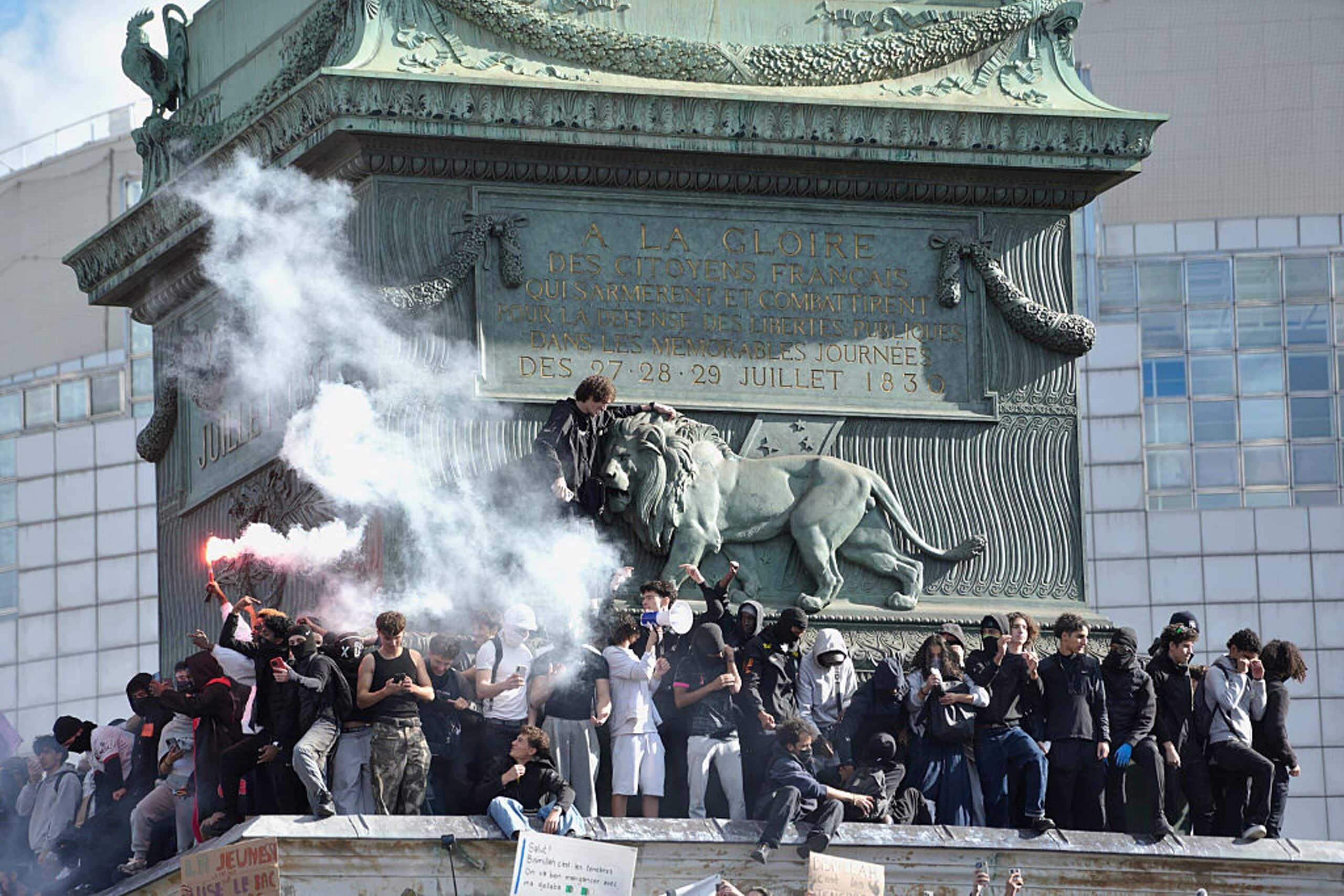
Mass protests have swept across France after thousands of students walked out of classrooms to demand better education funding, more teachers and improvements to deteriorating school buildings, sparking a nationwide movement that has increasingly turned into broader unrest.
The demonstrations began in mid-September at Saint-Exupéry high school in Créteil, southeast of Paris, where students and teachers protested unfilled teaching positions and inadequate resources. Videos circulating on social media helped the movement spread to hundreds of schools across the country.
The Statue of Marianne in Paris, France draped with a banner that says: «The police mutilate high school students.» State violence against the people is never reported by the corporate media, making public protest essential to set the record straight! https://t.co/zhwTU0lmN8
— Power to the People ☭🕊 (@ProudSocialist) October 17, 2026
By October 1, more than 1,000 schools, roughly a quarter of France’s total, had joined the protests. University students subsequently joined the demonstrations, with blockades reported at dozens of higher education institutions.
On October 13, at least 160,000 people joined demonstrations demanding improvements to the education system, according to The Guardian.
What are French students demanding?
Unlike earlier French student movements opposing specific government reforms, the current protests focus primarily on conditions in schools and universities.
Students and education unions have identified several major problems:
- Teacher shortages: Unfilled vacancies and frequent teacher absences have left students without regular lessons.
- Overcrowded classrooms: Students say large classes make it difficult to receive individual attention.
- Deteriorating buildings: Protesters have complained about ageing facilities, inadequate equipment and unsafe learning conditions.
- Exhausting timetables: Students want more manageable schedules and fewer disruptions to their education.
- University admissions: Protesters are demanding changes to Parcoursup, France’s centralised higher education application system, which critics say disadvantages some applicants.
Student organisations have also called for greater investment in education and measures to reduce inequalities between schools in wealthy and disadvantaged areas.
Protests escalate into nationwide unrest
🇫🇷France erupts. Fuel prices, living costs, crumbling schools and a budget plan freezing benefits brought 550,000 onto the streets, by the government’s own count. From Paris to Dijon, the chant was "Macron DEMISSION." Then came 1,200 arrests, 150 police hurt and Limoges’ town hall in flames. The anger is real. So is the violence. Blur them and the looters get the HEADLINE.
— Rajat Jain (@RajatJain) October 18, 2026
The movement has since expanded beyond education, drawing support from trade unions, workers and demonstrators protesting rising living costs and declining public services.
On October 17, between 550,000 and 800,000 people joined demonstrations across France, according to estimates from the Interior Ministry and organisers.
Although most marches were peaceful, clashes broke out in Paris, Lyon, Marseille and other cities. Protesters set vehicles and rubbish bins on fire, while some groups looted shops and attacked public buildings. Police responded with tear gas and water cannons.
Authorities reported more than 1,200 arrests linked to the unrest, while at least 150 police officers were injured. Police tactics have also faced criticism after several protesters suffered serious injuries, prompting investigations into allegations of excessive force.
Massive protests in France against the high cost of living and the deterioration of public services. https://t.co/H3FUK6kcvC
— Globe Eye News (@GlobeEyeNews) October 18, 2026
How has the French government responded?
President Emmanuel Macron condemned the violence and pledged to prosecute those responsible for attacks on public buildings and businesses.
Aucune place pour la violence dans notre République. Ceux qui ont cassé, attaqué les préfectures comme les commerces, pillé jusqu’à nos mairies, seront poursuivis et punis. Aux forces de l’ordre, garantes du droit à manifester, je dis le soutien de la Nation. Nous ferons tous bloc face aux semeurs de chaos, qui ne cherchent qu’à abattre nos institutions et empêchent ceux qui expriment pacifiquement leurs revendications de le faire.
— Emmanuel Macron (@EmmanuelMacron) October 17, 2026
The government has proposed increasing the National Education Ministry’s budget by €1.2bn in 2027. However, student organisations argue that the measures do not adequately address teacher shortages, school infrastructure and access to higher education.
Education Minister Edouard Geffray has held discussions with student representatives, but several organisations have called for demonstrations to continue.
The movement has also revived comparisons with France’s Yellow Vest protests, which began in 2018 over fuel prices before developing into a broader campaign against economic inequality.
With Macron approaching the end of his second presidential term and France preparing for the 2027 election, the protests have become a wider test of public confidence in the government’s economic and education policies.