Serbia votes as student movement challenges Vučić’s decade-long rule

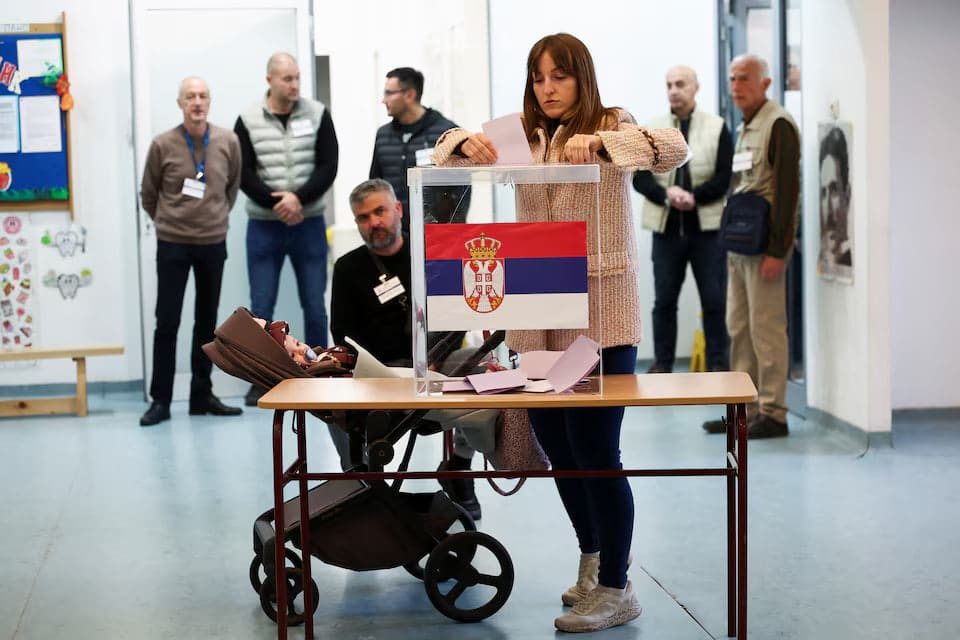
Voters across Serbia went to the polls on Sunday, 25 October, for an early parliamentary election that could bring an end to the Serbian Progressive Party’s (SNS) long-standing control of the country’s government.
The vote comes after almost two years of demonstrations led by students, who have become a major political force since a railway station canopy collapsed in Novi Sad in November 2024, killing 16 people. The tragedy fuelled public anger over alleged corruption and failures in government oversight.
Early turnout figures suggested strong voter interest. Polling organisations CeSID and Ipsos reported that 27.3% of eligible voters had cast their ballots by 11 a.m., significantly higher than the 15.1% recorded at the same time during the previous parliamentary election in 2023.
Some polling stations saw lengthy queues, including the one where former President Aleksandar Vučić reportedly spent nearly two hours waiting to cast his vote.
The main contest is between the ruling SNS and a student-supported coalition whose 250 candidates include academics, farmers and figures from the arts.
Cardiologist Ilija Srđanović leads the student-backed electoral list, although the movement has yet to identify its preferred candidate for prime minister.
Opinion polls published shortly before election day offered different pictures of the contest. An Ipsos survey released on 22 October gave the SNS 47% support against 40% for the student-backed opposition, while other surveys placed the latter ahead.
From university demonstrations to national politics
The student movement initially demanded accountability for the Novi Sad railway station disaster, including an investigation into the construction work and possible corruption behind the project.
Its demands gradually widened to include changes to Serbia’s political institutions, greater transparency and an end to alleged pressure on independent media and government critics.
The ruling party has rejected accusations of systemic corruption and political intimidation. Vučić has also claimed that foreign interests helped organise the protests, an allegation denied by student representatives.
The student-backed campaign has focused largely on domestic reforms, particularly tackling corruption, improving education and strengthening the independence of public institutions.
Meanwhile, Vučić, who stepped down from the presidency in September to pursue the premiership, has highlighted economic growth, infrastructure investment and proposed increases in salaries and pensions.
What the election means for Serbia’s foreign policy
The election could also affect Serbia’s diplomatic direction, particularly its relationship with the European Union.
Under Vučić, Belgrade has sought to balance its ambition to join the EU with continued cooperation with Russia and China.
However, Serbia’s European integration process has faced obstacles over concerns about the rule of law, judicial independence and the state of its democratic institutions.
Although the student-backed opposition has called for political reforms, it has provided limited detail on how it would handle relations with Brussels, Moscow and Beijing if it entered government.
Speaking to journalists after casting his ballot, Vučić said he would respect the result, while insisting that any SNS victory should also be accepted.
Election observers reported concerns about voter registers and ballot secrecy, although officials said polling had generally proceeded without major disruption.
Voting is scheduled to finish at 8 p.m. local time, with preliminary figures expected later on Sunday evening. The authorities are due to release official results on Monday, 26 October.
