Serbia’s student movement wins elections, but who will govern next?

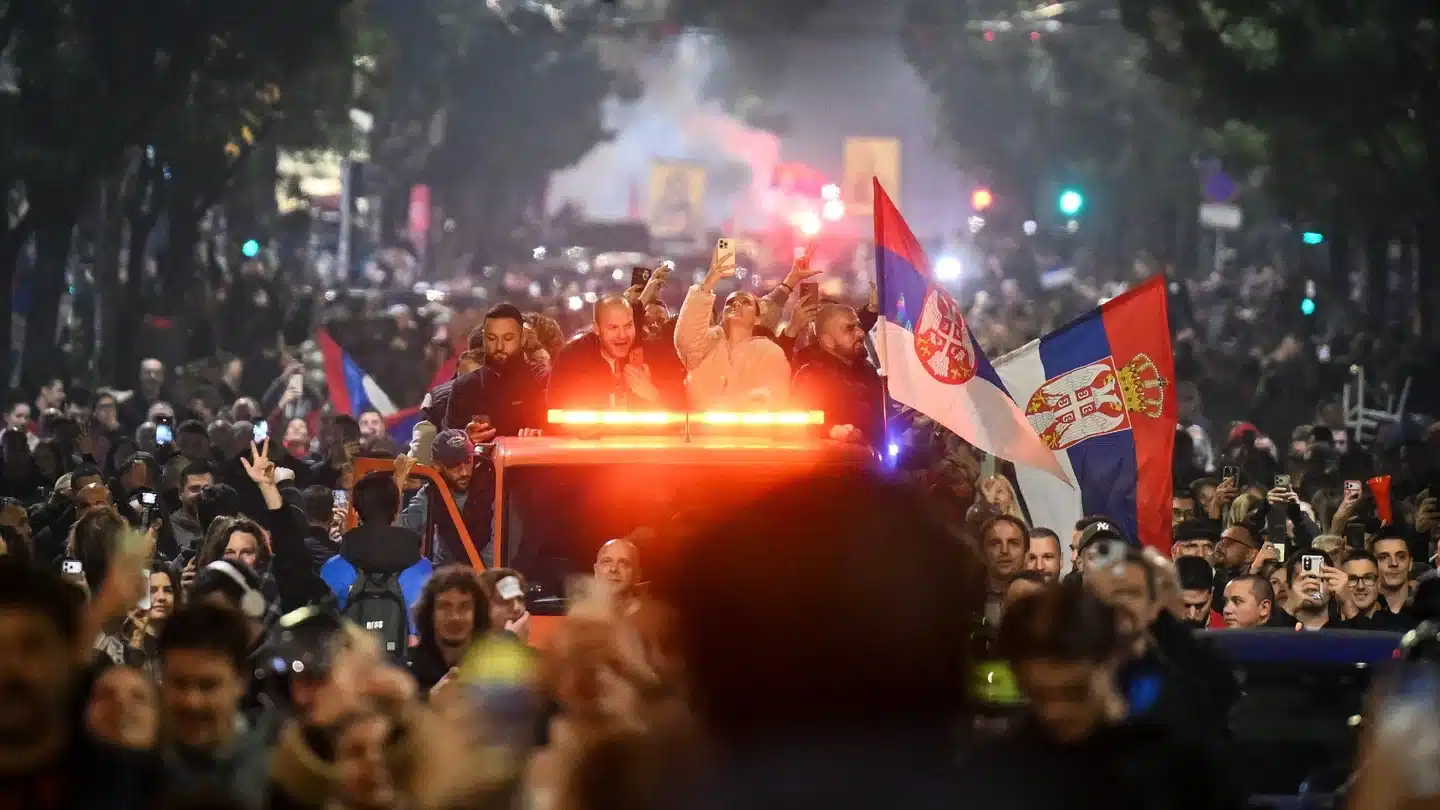
Serbia’s student-led opposition is preparing to form a government after winning Sunday’s parliamentary election, but questions remain over who will lead the country and how the movement plans to deliver its promised reforms.
Preliminary results released on Monday, 26 October, showed the Student List securing 51.89% of the vote, against 39.73% for Aleksandar Vučić‘s United Serbia coalition.
The figures covered 7,807 polling stations, with student-backed candidates receiving more than 2.04mn votes compared with approximately 1.57mn for Vučić’s bloc.
BREAKING: Aleksandar Vučić conceded defeat in Serbia’s snap parliamentary election, saying the student-backed Student List had won. «Based on a stratified sample, it is clear that we have lost this election. The student blockade list won,» Vučić said. The result ends more than a decade of dominance by Vučić’s Serbian Progressive Party.
— Clash Report (@clashreport) October 25, 2026
Vučić conceded defeat on Sunday evening, estimating that the movement would win between 135 and 140 seats in Serbia’s 250-member parliament, enough to govern without a coalition.
The result sparked celebrations across Serbia, where students had spent nearly two years organising demonstrations against corruption and demanding political accountability.
Who will lead Serbia’s next government?
The Student List includes university professors, doctors, farmers and cultural figures, bringing together candidates largely outside Serbia’s established political parties.
Although cardiologist Ilija Srđanović heads the electoral list, the movement has yet to announce its candidate for prime minister.
Its campaign focused on tackling corruption, improving education and strengthening public institutions. The immediate challenge will be forming a cabinet and turning those pledges into legislation.
🇷🇸 After nearly 2 years of almost daily peaceful protests across Serbia, students have won the elections, defeating the country’s autocrat Vucic. Video by Student List who will govern the country. https://t.co/m4ngvvzEFn
— kos_data (@kos_data) October 25, 2026
The new parliamentary majority also faces questions about the election itself.
Serbian watchdog CRTA reported pressure on voters and election officials at 29% of monitored polling stations, procedural failures at 18% and irregularities affecting voting integrity at 17%.
Observers also documented alleged vote buying and breaches of ballot secrecy. These allegations remain subject to investigation.
Foreign policy remains another unanswered question
The election could affect Serbia’s relationship with the European Union, Russia and China.
Under Vučić, Belgrade maintained close ties with Moscow and Beijing while pursuing EU membership. The student movement has concentrated on domestic reforms without outlining a detailed foreign policy agenda.
Celebrations have erupted in the streets of Serbia’s capital Belgrade, after long-standing leader Aleksandar Vučić admitted defeat to a student-led protest movement in snap parliamentary elections. Read more: https://t.co/iOYTfXzeuc https://t.co/gQ2qDuPgU3
— BBC News (World) (@BBCWorld) October 25, 2026
EU Enlargement Commissioner Marta Kos has signalled that Serbia’s membership path remains open, with attention now turning to judicial independence and democratic reforms.
Another political test is approaching: Serbia must hold a presidential election before the end of 2026 following Vučić’s resignation in September.
Having moved from university demonstrations to a parliamentary majority, the Student List must now agree on its leadership and show whether it can deliver the changes that brought it to power.
