Apple’s 1st touchscreen MacBook: Five major drawbacks to know

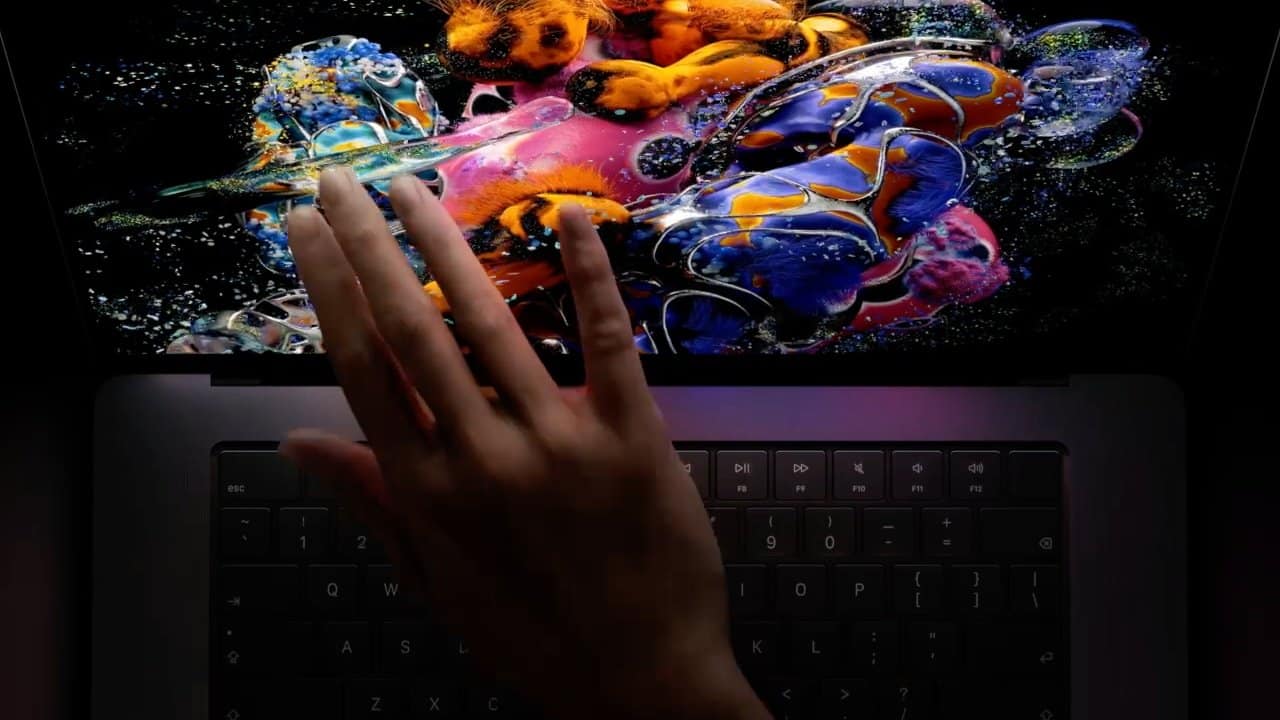
Apple‘s first touchscreen MacBook Pro has drawn mixed reactions from technology reviewers, who praised its OLED display and lighter design but questioned whether the upgrades justify its $400 price premium.
Unveiled on 28 October, the new MacBook Pro with ProLED XDR display starts at $2,899 for the 14-inch model and $3,399 for the 16-inch version. Both retain the M5 Pro and M5 Max processors already available in Apple’s standard MacBook Pro lineup.
Tech reviewers Marques Brownlee, known as MKBHD, and AppleInsider raised several concerns after examining the laptops, particularly regarding the usefulness of touch controls on macOS, display wobble, and the lack of significant performance improvements.
The new models introduce tandem OLED technology, thinner bezels and Apple’s Dynamic Island, replacing the display notch. They are also lighter than their predecessors, with the 14-inch version weighing around three pounds and the 16-inch model around four pounds.
Buyers will pay considerably more for these changes without receiving a newer generation of processors.
Touchscreen struggles to justify its price
Brownlee questioned whether adding touch support makes the MacBook Pro more practical for everyday tasks.
The display responded to scrolling, pinch-to-zoom, and multiple touch gestures during his hands-on demonstration. He claimed that most Mac apps are designed for keyboard and trackpad rather than screen interaction.
Apple added larger interactive controls and window-arranging gestures to macOS for touch input. Brownlee experienced awkwardness when selecting small window controls.
He also noted that the new MacBook Pro does not support Apple Pencil, limiting its usefulness for users who might otherwise want to draw or annotate directly on the screen.
One application he considered potentially useful was testing iPhone applications in Xcode, where developers could interact directly with a simulated iPhone screen.
Same processors, higher prices and no Face ID
The new MacBook Pro costs $400 more than comparable standard models despite using the same M5 Pro and M5 Max chips. The standard 14-inch MacBook Pro with M5 Pro starts at $2,499, compared with $2,899 for the OLED touchscreen version. The 16-inch model rises from $2,999 to $3,399.
Buyers choosing the more expensive device primarily gain the redesigned display, touch functionality and a lighter chassis rather than additional processing power. Brownlee also pointed to another missing feature: Face ID.
Despite replacing the notch with Dynamic Island, Apple continues to rely on a Touch ID fingerprint sensor for biometric authentication. The Dynamic Island houses the webcam and ambient light sensor but does not introduce facial recognition.
Although Apple has improved the speakers and cooling system, the upgrades may not offer enough practical benefits for owners of recent MacBook Pro models.
