Israel elections: Can Arab parties unseat Netanyahu?

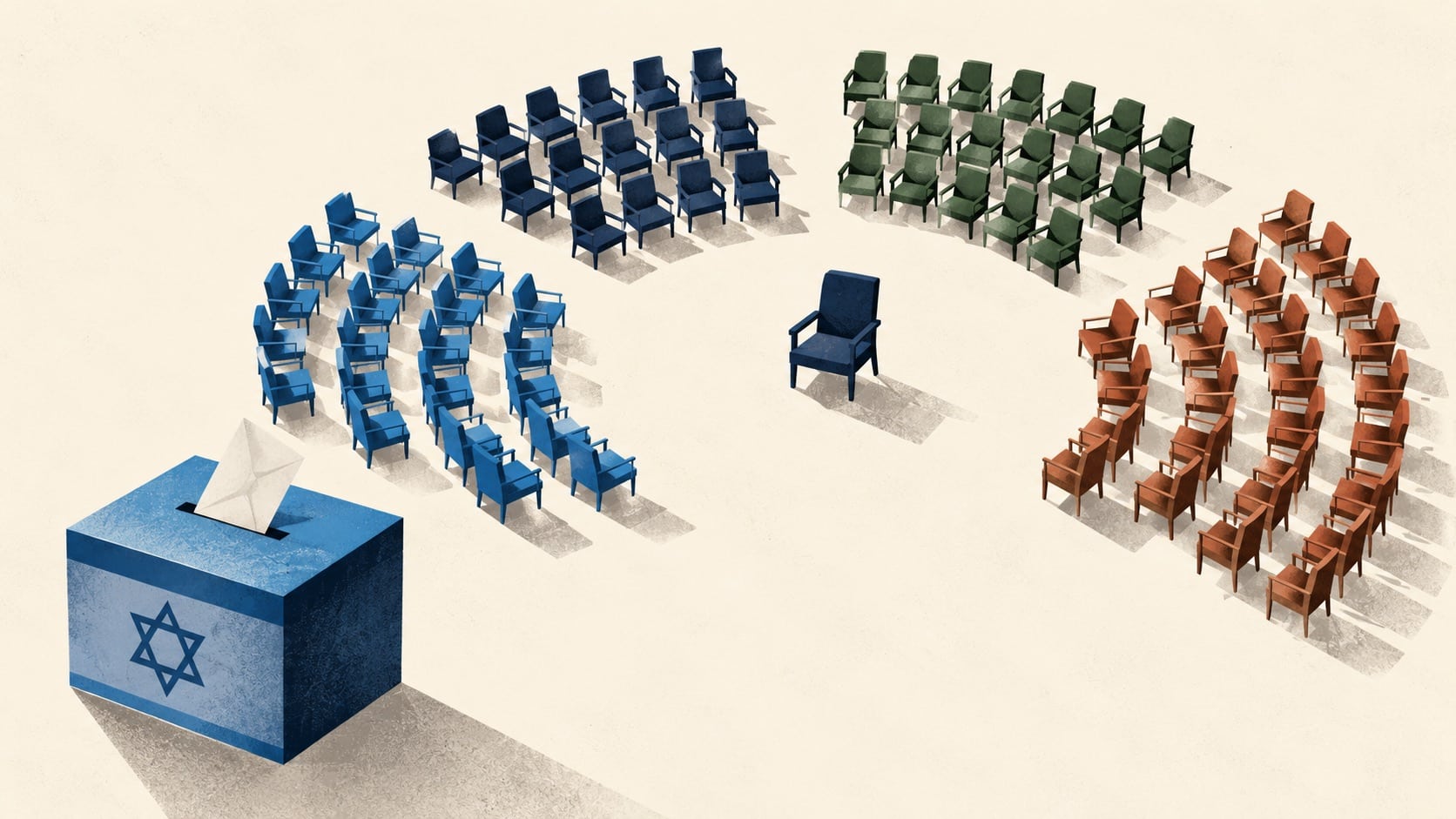
Israel’s Arab parties have won 19 parliamentary seats in the country’s most consequential elections over the past years. The all-time electoral record, which is almost double their current 10 seats, is enough to help Benjamin Netanyahu’s rivals replace him — but it comes with a giant asterisk.
The completed count gives Netanyahu’s Likud 27 seats, with approximately 20.5% of valid votes, ahead of former military chief Gadi Eisenkot’s Yashar, which won 21 seats and 16.1%. The Arab-led Joint List secured 11 seats with 8.8%, while another Arab party, Ra’am, took eight with 5.9%, according to the published results tally.
That leaves Netanyahu’s allies at 53 seats, the main Jewish-led opposition camp at 48 and the two Arab-led lists holding the remaining 19. Neither camp could reach the 61 seats needed for an outright majority in the 120-member Knesset, according to The Times of Israel.
- Who are Israel's Arab parties and what they stand for?
- Can Arab parties shift the balance against Netanyahu?
Celebrations erupted in Lod, Kafr Manda and Tayibe after Israeli media exit polls projected a combined 18 Knesset seats for the Joint Arab List and United Arab List. The projected result marked a potentially significant moment for Arab political representation in Israel. https://t.co/TWKkvpFWmP
— Al Jazeera English (@AJEnglish) October 27, 2026
Who are Israel’s Arab parties and what they stand for?
The 19 seats belong to two competing electoral lists. Ra’am ran independently; Hadash, Ta’al and Balad were running together as part of the Joint List. Their shared opposition to Netanyahu does not erase differences over religion, Palestinian identity or participation in government.
Read more: How Israel’s elections work — and why they matter to Uzbek migrant workers
Ra’am: Influence through government
Mansour Abbas, a dentist-turned-politician, leads the United Arab List, better known as Ra’am. The party has socially conservative Islamic roots but puts coalition bargaining at the centre of its strategy: it secures government influence and then uses it to improve the lives of Arab citizens.
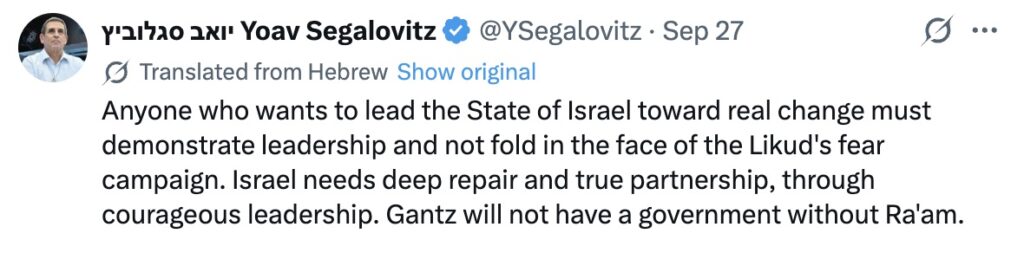
Its priorities include tackling organised crime, funding Arab municipalities, improving housing and recognising unrecognised Bedouin villages. Ra’am joined the Bennett–Lapid coalition in 2021; this year, it broadened its appeal by placing Jewish former senior police commander Yoav Segalovitz second on its slate.
Hadash: An Arab–Jewish left-wing partnership
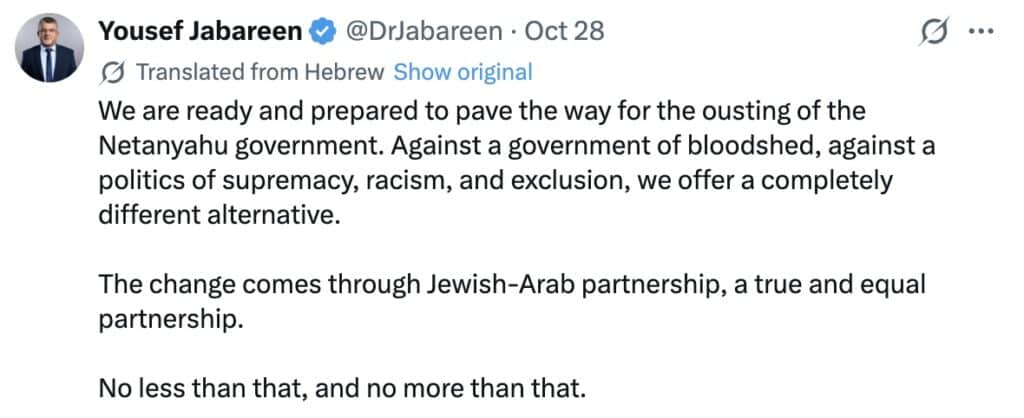
Yousef Jabareen, a law professor and human rights specialist, heads Hadash and the Joint List’s electoral slate. Hadash is a communist-led Arab–Jewish alliance that advocates workers’ rights, social equality and a Palestinian state alongside Israel, according to the Israel Democracy Institute. Its elected representatives include Jewish lawmaker Ofer Cassif.
Ta’al: Equality through parliamentary politics
Ahmad Tibi, a physician first elected in 1999, leads the secular Arab Movement for Renewal, or Ta’al. It supports Palestinian statehood and equal rights for Arab citizens of Israel. Tibi’s parliamentary work has focused on municipal funding, education, healthcare and employment, according to his official candidate profile.
Balad: A ‘state of all its citizens’
Sami Abu Shehadeh remains Balad’s chairman, although he withdrew his election candidacy before polling day. The secular Palestinian nationalist party advocates transforming Israel into a «state of all its citizens», with equal citizenship and recognition of the Arab minority’s collective national rights. It also supports separating religion from the state, the Israel Democracy Institute notes.
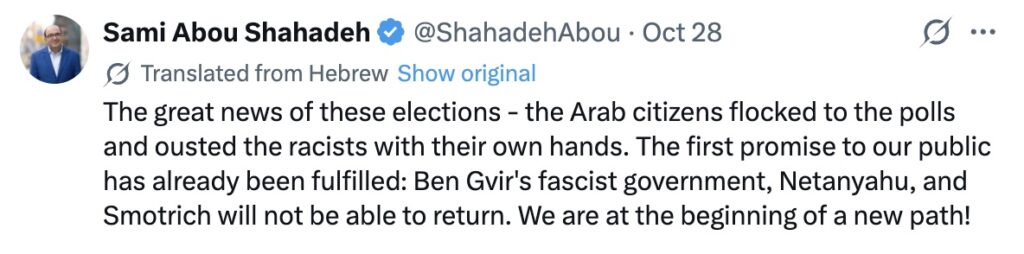
The three Joint List partners share a 2026 programme calling for a Palestinian state on the 1967 borders, with East Jerusalem as its capital, and measures against violent crime, housing restrictions and discrimination.
Read more: Uzbekistan backs UN declaration on Palestinian statehood
Can Arab parties shift the balance against Netanyahu?
Combining the opposition’s 48 seats with both Arab-led lists produces 67, so it is safe to say that the formal arithmetic works on paper. Adding Ra’am alone gives 56; adding only the Joint List gives 59.
However, the simple math does not translate into political arrangements so far. Eisenkot’s Yashar, Bennett and Lapid’s B’Yachad and Avigdor Liberman’s Yisrael Beytenu have ruled out governing with Arab parties. Of the four main Jewish-led opposition parties, only Yair Golan’s Democrats have openly floated that possibility.
The Joint List is willing to work politically to remove Netanyahu, but it has not publicly stated whether or under what conditions it would support Eisenkot.
Read more: Mirziyoyev reaffirms Uzbekistan’s support for an independent Palestinian state
A minority government using Arab parties’ votes from outside the coalition is another option, but it would require political divisions to agree.
