Bangladesh garment workers clash with police as wage protests shut factories

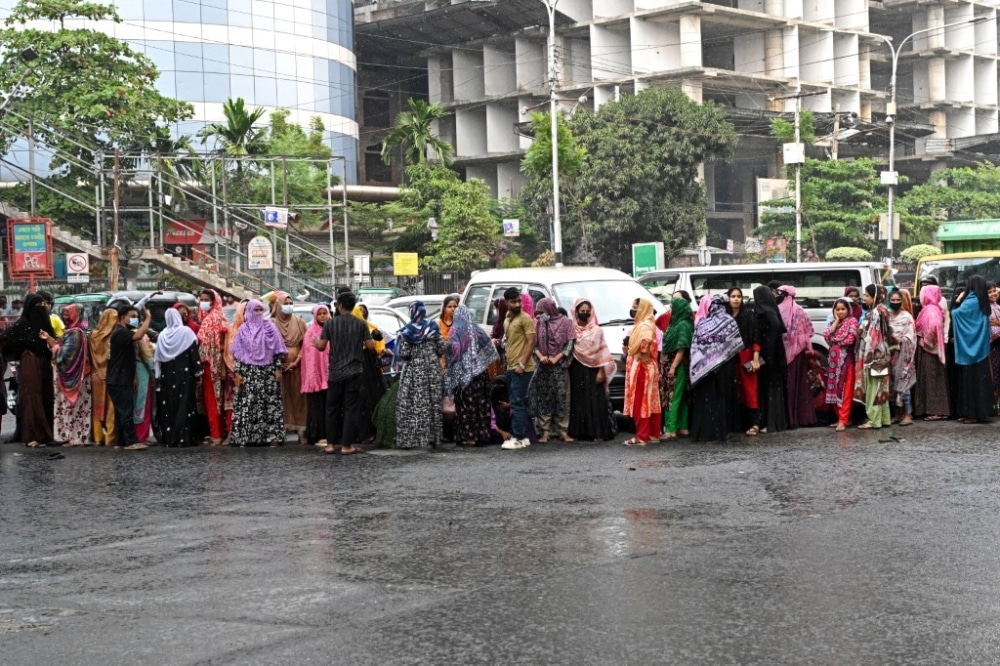
Thousands of garment workers took to the streets across Bangladesh on Sunday, 1 November, demanding higher wages despite the government’s decision to establish a new wage board, as clashes with police and factory shutdowns disrupted the country’s largest export industry.
Workers are calling for the minimum monthly wage to rise to 30,000 taka ($245), more than double the current 12,500 taka ($102). They say rising food, housing, transport and healthcare costs have made their existing salaries insufficient to cover basic expenses.
Police used tear gas and water cannon to disperse demonstrators who had blocked a major intersection in the capital, Dhaka. Some protesters threw bricks at officers during the confrontation, according to Reuters.
In Gazipur, an industrial centre outside Dhaka, hundreds of workers blocked a major highway, disrupting transport and forcing factory owners to suspend operations.
Gazipur Industrial Police Superintendent Mohammad Amjad Hossain said between 25 and 30 factories had closed because of the unrest. Authorities also deployed Border Guard Bangladesh personnel to help maintain order.
The demonstrations followed protests on Saturday, 31 October, in Ashulia, another major garment manufacturing centre near the capital. Dozens of factories suspended production after workers walked out, while clashes left several people injured, including police officers.
Government promises wage review as export disruptions grow
Bangladesh’s government announced the formation of a six-member wage board on Sunday following negotiations with labour representatives and industry leaders.
Labour and Employment Minister Ariful Haque Chowdhury urged employees to resume work, saying the new board would address their demands for higher pay.
However, the announcement failed to halt the demonstrations, with workers continuing to demand immediate improvements to their wages.
Chowdhury warned that extended factory closures could disrupt production schedules, delay shipments and postpone payments from overseas buyers.
Bangladesh is the world’s second-largest clothing exporter after China. Its ready-made garment industry employs approximately four million people, generates more than 80% of the country’s export earnings and contributes around 10% of gross domestic product.
The sector supplies clothing to major international fashion brands, making prolonged production disruptions a concern for global supply chains.
Factory owners say they are also struggling with increasing manufacturing costs, intermittent gas and electricity shortages and uncertainty in energy markets linked to tensions in the Middle East.
The newly established wage board has yet to announce a proposed minimum salary or a timetable for implementing changes. Meanwhile, workers continue to demand an increase that would more than double their current minimum pay.
