Autonomous robot builds in zero gravity for first time in human history

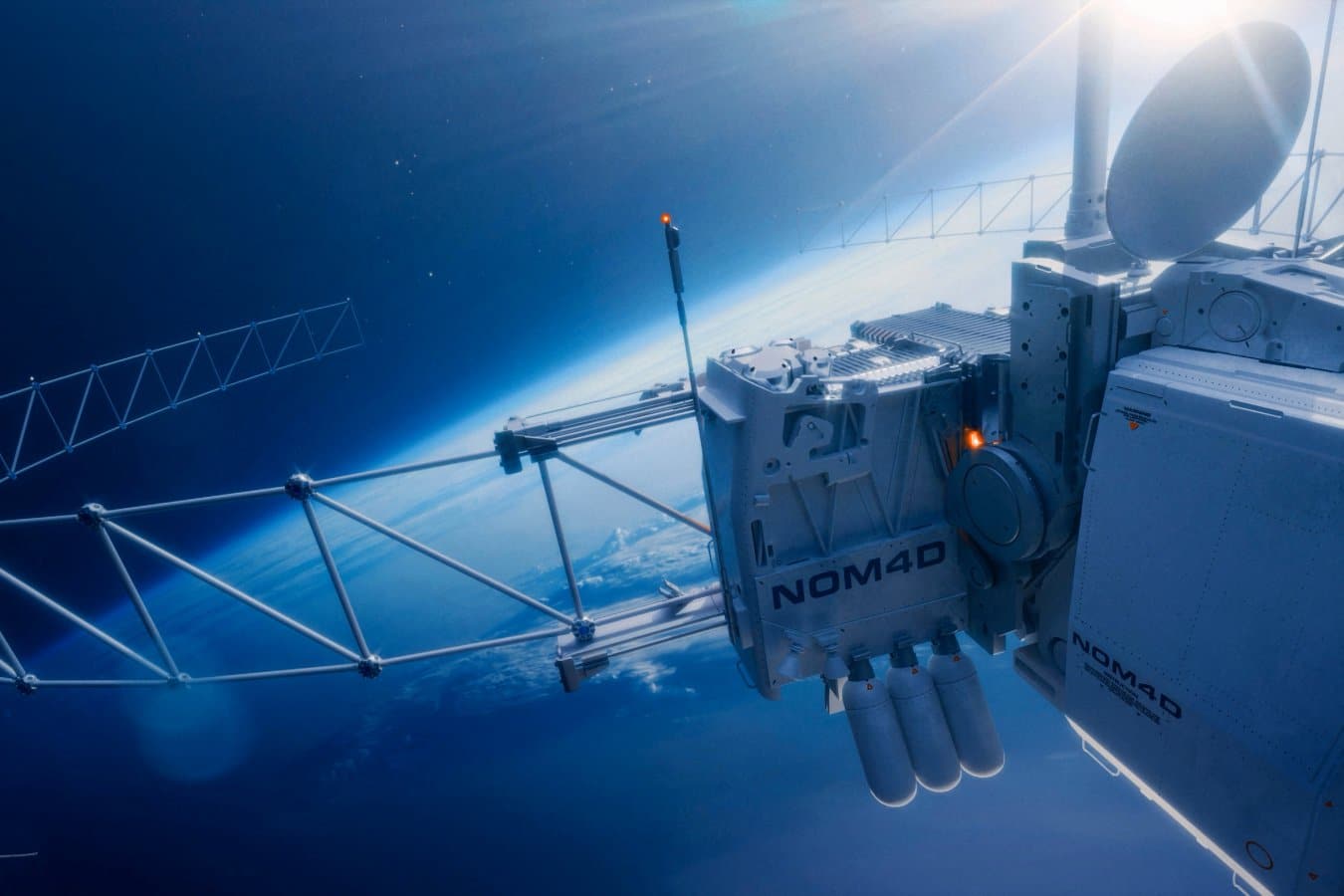
A robot snapped tubes and joints together into a radio antenna frame without an astronaut on hand. It was a small build with a big implication: future spacecraft could go up in pieces and take their full shape in orbit.
The experiment, led by Sergio Pellegrino at the California Institute of Technology for the US defence research agency DARPA, was launched in March. The team aims to build an antenna 1.4 metres across.
It was still unfinished when New Scientist reported on the mission on 12 November, but the robot had already demonstrated the crucial step: joining separate pieces in orbit without an astronaut there to help.
A reflective mesh, which would aid the antenna in collecting radio waves, was spread out by the machine as it picked up tubes and fitted them into joints. For everything to fit together, every step had to be pinpoint accurate. With just eighteen months to go from concept to orbital test, the team was up to the challenge.
Building in zero gravity? ✅ Autonomously? ✅ With simple engineering principles? ✅ Our NOM4D program, with @Caltech, has demonstrated the first automated assembly of a structure in space, marking a major milestone in how we design, build, and operate beyond Earth. https://t.co/nyV0etC9S6
— DARPA (@DARPA) November 5, 2026
Read more: SpaceX sends first commercial nuclear-powered satellite into orbit
Why build in orbit?
Engineers on Earth still had a role. The spacecraft sent back images as the work progressed, and the team used an identical robot in their lab to work through problems. The mission is due to end in December.
A rocket sets a hard limit on how much room a spacecraft has at launch. Engineers can squeeze a large structure inside by folding it on Earth and opening it in space. The more complicated the structure, the harder it is to make every part fold neatly and open in the right order.
Sending up a kit changes that calculation. Tubes can travel bundled together, with the joints packed around them.
Read more: China’s StarVision to launch ‘Samarkand 2028’ satellite for Uzbekistan
Once in orbit, a robot could join those pieces into a structure wider than the rocket that carried them. Engineers could design the finished structure around what it needs to do in space.
The next test is scale
A much bigger antenna would require the robot to repeat the job many more times, with each piece fitting perfectly enough for the next one to go on. Pellegrino wants future systems to build larger structures faster and with less troubleshooting from Earth.
Space stations and orbital data centres are still further-off possibilities. The next question is whether a robot can keep building, joint after joint, with fewer interventions from the ground.
