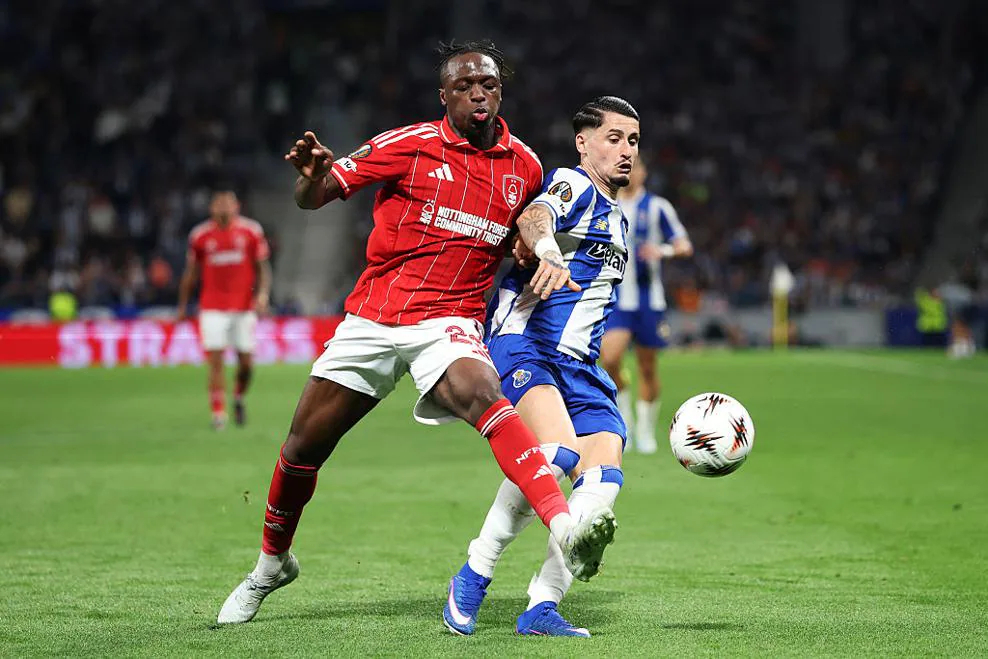
Porto drew 1-1 with Nottingham Forest in the first leg of the Europa League quarter-finals. The winner of the tie will be decided in the return match.
How the match unfolded
Porto started the game actively and quickly took control. In the 10th minute, Gomes opened the scoring after a cross to the far post.
The hosts continued to apply pressure and dominated possession. However, Nottingham Forest quickly equalised. In the 13th minute, Fernandes scored an own goal, which became a key moment in the match.
After that, the game evened out. Porto attacked more frequently and created chances but failed...