
The World of NAVI and a New Window of Opportunity for Uzbekistan

Five years ago, the idea that electricity rather than oil or even artificial intelligence would become one of the defining issues of the global economy might have sounded surprising.
Today, that reality is already taking shape.
As artificial intelligence continues to advance, technology companies around the world are competing not only for engineers and data, but also for reliable sources of energy. Every new data centre requires enormous computing power and an uninterrupted electricity supply. At the same time, countries are reconfiguring supply chains, investing in critical minerals, and competing for skilled talent.
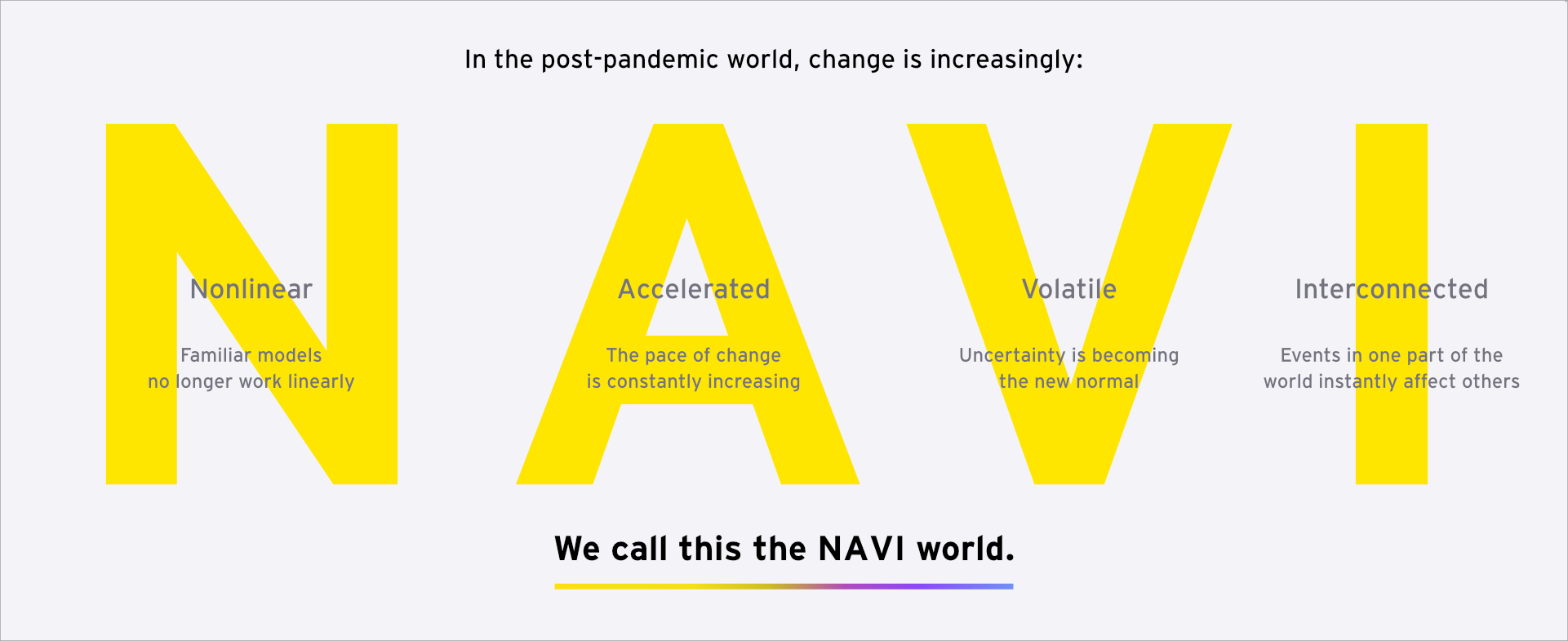
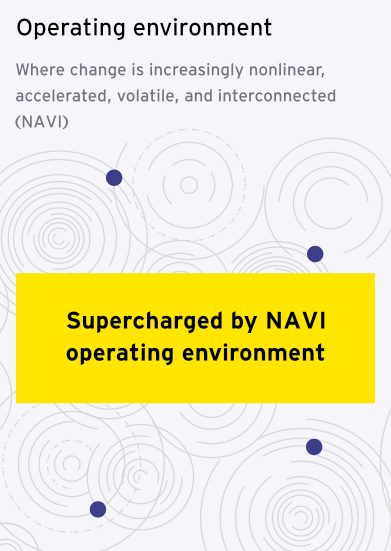
In its Futures Reimagined 2026 report, EY describes this new reality as the NAVI World: a world defined by nonlinear, accelerating, volatile, and interconnected change.
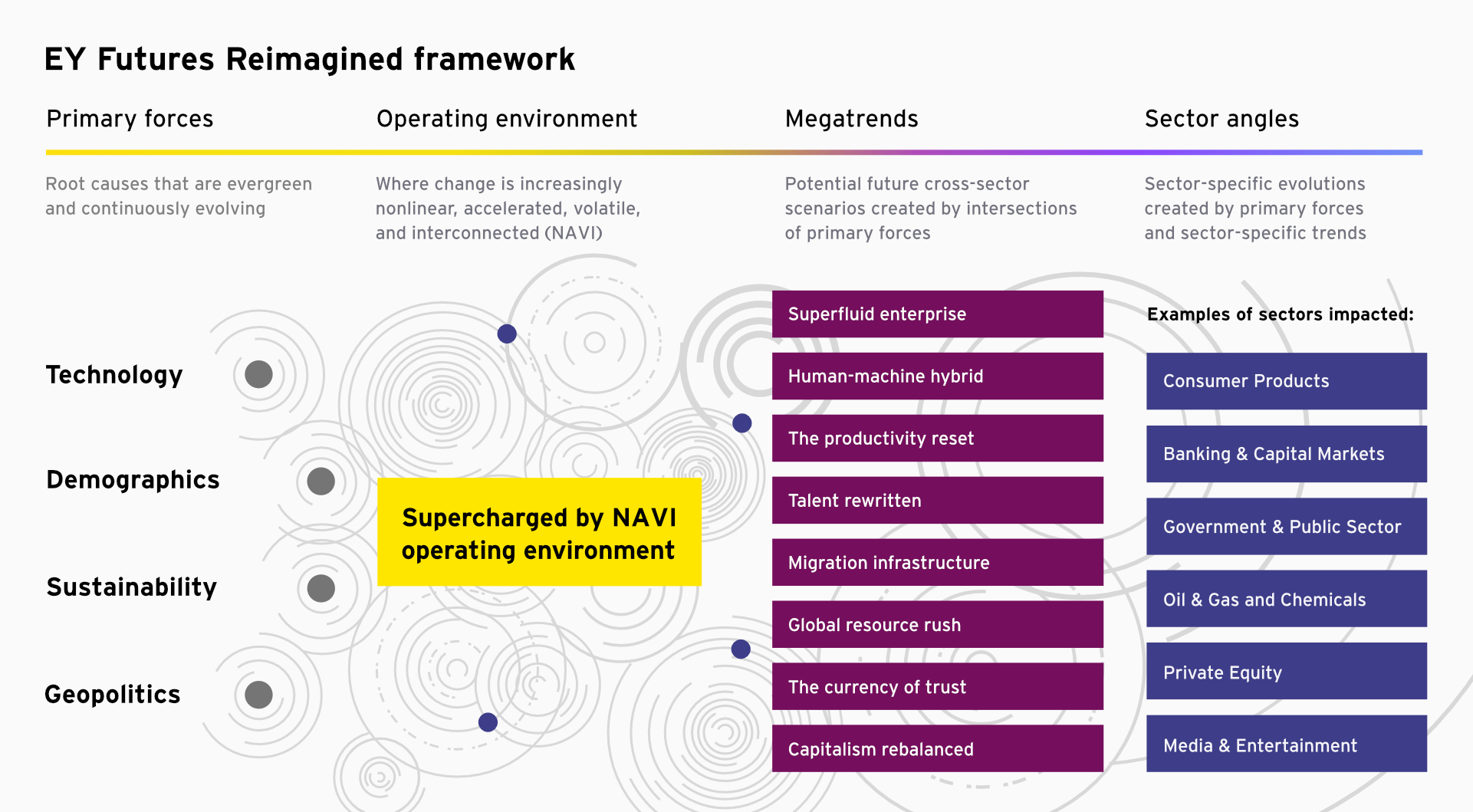
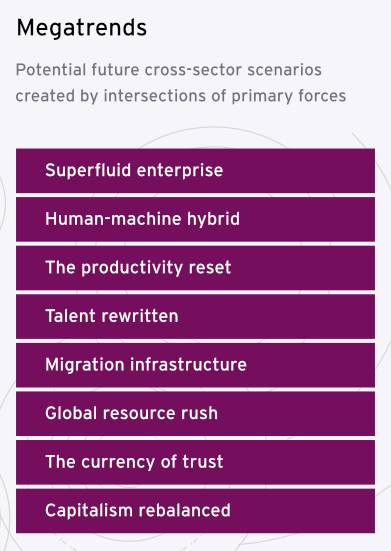
The most powerful force behind this transformation is the way these trends are becoming increasingly interconnected.

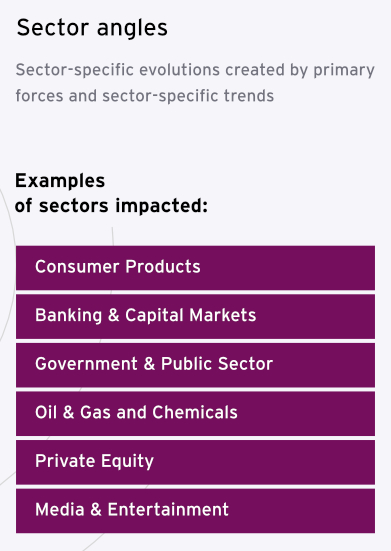
What makes Uzbekistan's position particularly compelling is that many of these global trends are beginning to converge within the country itself.
AI has become an energy story
Over the past two years, global conversation has largely focused on the potential of artificial intelligence. However, as large language models have become more widely used, it has become clear that the biggest constraint is not the algorithms themselves, but the infrastructure required to run them.
The next generation of data centres demands reliable electricity, high-speed connectivity, and substantial investment in computing capacity. As a result, the world's largest technology companies are investing simultaneously in AI and in the infrastructure needed to scale it.
The scale of these investments continues to grow. While major technology companies collectively spent more than US$300 billion on AI-related infrastructure in 2025, estimates for 2026 are significantly higher. Alphabet plans to invest US$175-185 billion in computing infrastructure and data centres; Amazon, about US$200 billion; and Meta, US$125-145 billion. Microsoft's AI infrastructure spending is also expected to continue rising as it expands Azure AI capabilities. Therefore, total investment by the largest technology companies in AI infrastructure could approach US$700 billion in 2026.
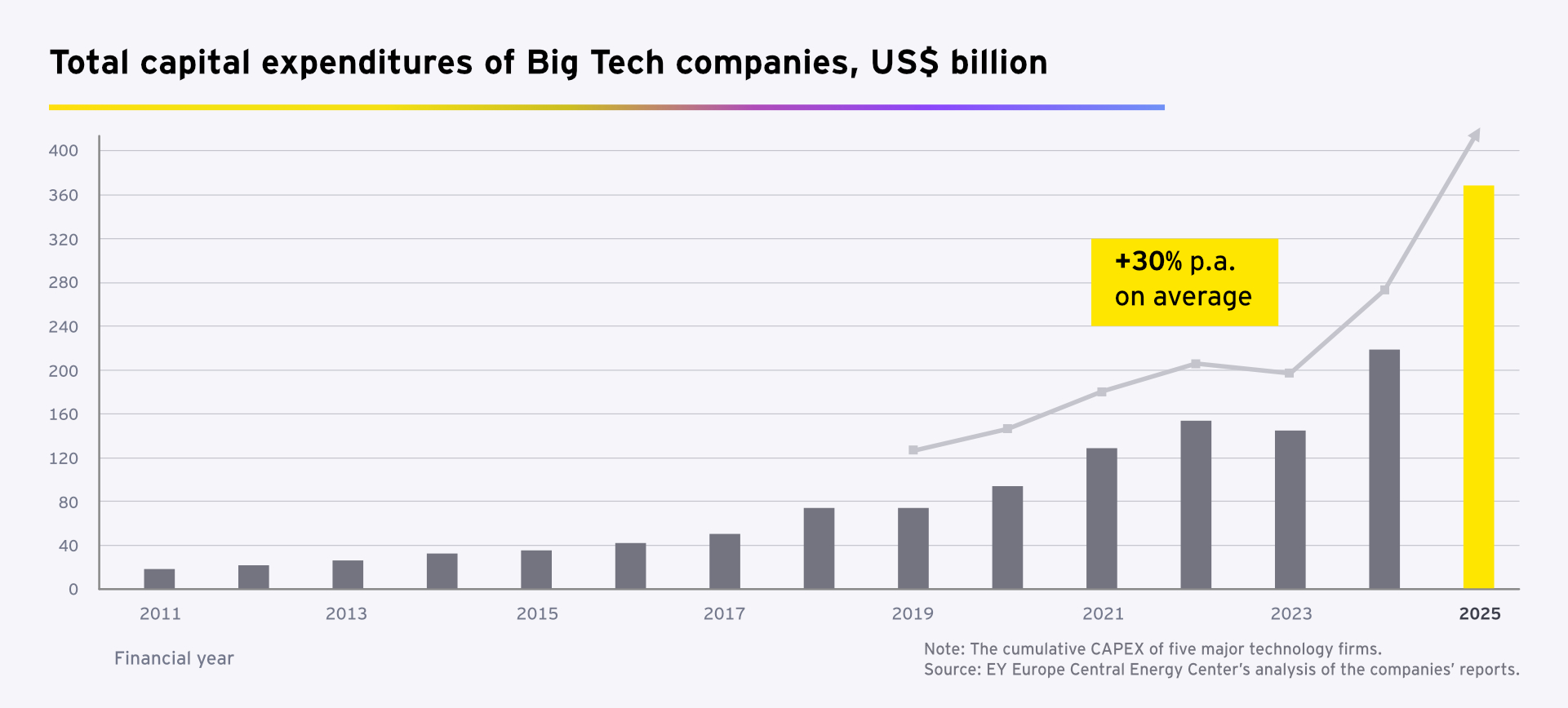
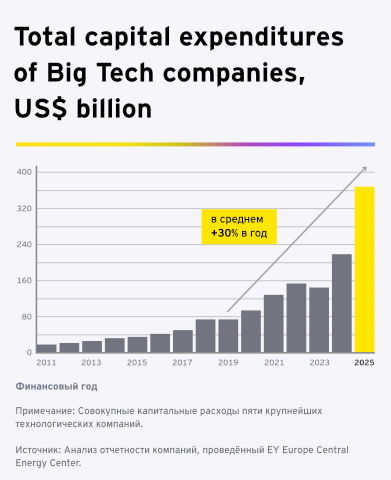
These numbers demonstrate that artificial intelligence is no longer merely a technology trend. It is becoming one of the largest investment cycles in the modern economy, with direct implications for construction, telecommunications, energy systems, and capital markets.
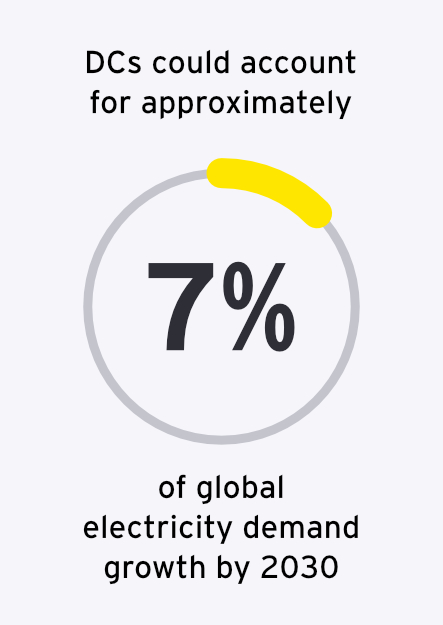
Energy consumption is growing alongside investment. According to EY, a typical AI-focused data centre consumes roughly as much electricity as around 100,000 households, while next-generation facilities may require considerably more. Data centres already account for approximately 1.5% of global electricity consumption, and demand continues to grow at a double-digit rate.
For Uzbekistan, this is no longer simply a global trend. This June, DataVolt secured up to US$150 million in project financing for the construction of the TAS-1 data centre in Tashkent, with a planned capacity of 12 MW. Designed as AI-ready infrastructure with liquid cooling technology for high-performance computing, the facility is expected to become one of Central Asia's largest green data centres. The first phase is scheduled to be operational by the end of 2026.
The country's broader digital infrastructure is also advancing rapidly. According to the official data portal Digital Government, internet coverage has reached 99.5%, internet penetration stands at 94.2%, the Unified portal of interactive public services now offers 800 services, and the platform serves 11.2 million users. Uzbekistan also ranks in ninth place globally in the GovTech Maturity Index.
The energy transition becomes a new investment story
The expansion of computing capacity and digital infrastructure is occurring alongside another major global trend: the accelerated development of new energy systems.
EY directly links digital transformation with rising energy demand and the need for substantial additions to generation capacity. At the same time, the energy transition is evolving from an environmental agenda into a question of economic competitiveness.
The relationship works both ways. While AI requires increasing volumes of electricity, the energy sector itself is becoming one of the largest users of AI, applying advanced analytics to forecast demand, optimise power grids, and improve generation efficiency. Increasingly, artificial intelligence and energy are not separate stories, but mutually reinforcing forces. EY observes that artificial intelligence and energy are becoming increasingly interconnected, with advances in one driving change in the other.
Against this backdrop, Uzbekistan is emerging as one of the most dynamic renewable energy markets across Eurasia.
The scale of this transformation is reflected in ongoing investment projects. According to discussions at the Tashkent International Investment Forum 2026, combined commitments by Masdar and ACWA to Uzbekistan's green energy sector exceed US$20 billion. Together, these companies have become key drivers behind the development of Central Asia's largest renewable energy market.
In January 2026, Masdar secured financing for the 300 MW Guzar Solar project in the Kashkadarya region, including a 75 MWh battery energy storage system. The project attracted US$225 million in financing and is expected to generate approximately 634 GWh of electricity annually.
Meanwhile, ACWA raised US$226 million in May 2026 to finance the Bash II wind farm, a 300 MW project in the Bukhara region. Once operational, the facility will provide electricity to more than 336,000 households and reduce carbon emissions by approximately 475,000 tonnes annually.
Only a few years ago, projects of this kind were viewed primarily through the lens of energy security. Today, they form part of a broader investment narrative connected to advanced manufacturing, the digital economy, and growing infrastructure demand.
As AI adoption accelerates, competition between countries is increasingly shifting toward the energy sector. The availability of reliable generating capacity is becoming as important to investors as institutional quality, logistics, and human capital. In this context, Uzbekistan's investment projects in solar and wind power acquire additional strategic significance.
The new resource economy: Why copper matters more than oil
One of the most significant megatrends identified by EY is what it calls the Global Resource Rush. The premise is straightforward: the energy transition and digitalisation are creating a new wave of global demand for resources. Unlike the twentieth century, the focus is no longer limited to oil and gas.

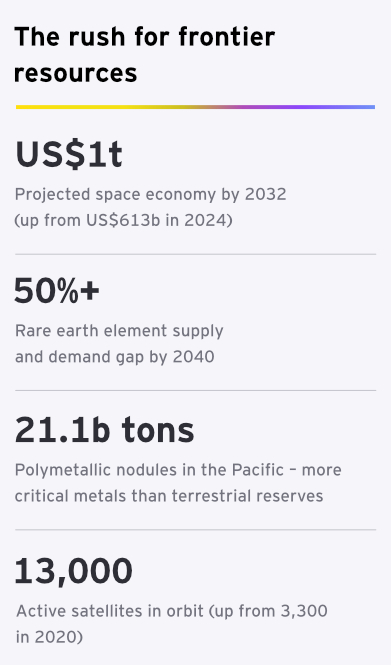
Electric vehicles, renewable energy systems, battery storage, data centres, and AI applications all require copper, uranium, silver, rare earth elements, and other critical minerals. According to EY, the material requirements of digital transformation and energy transition are reaching levels that existing supply sources may struggle to meet.
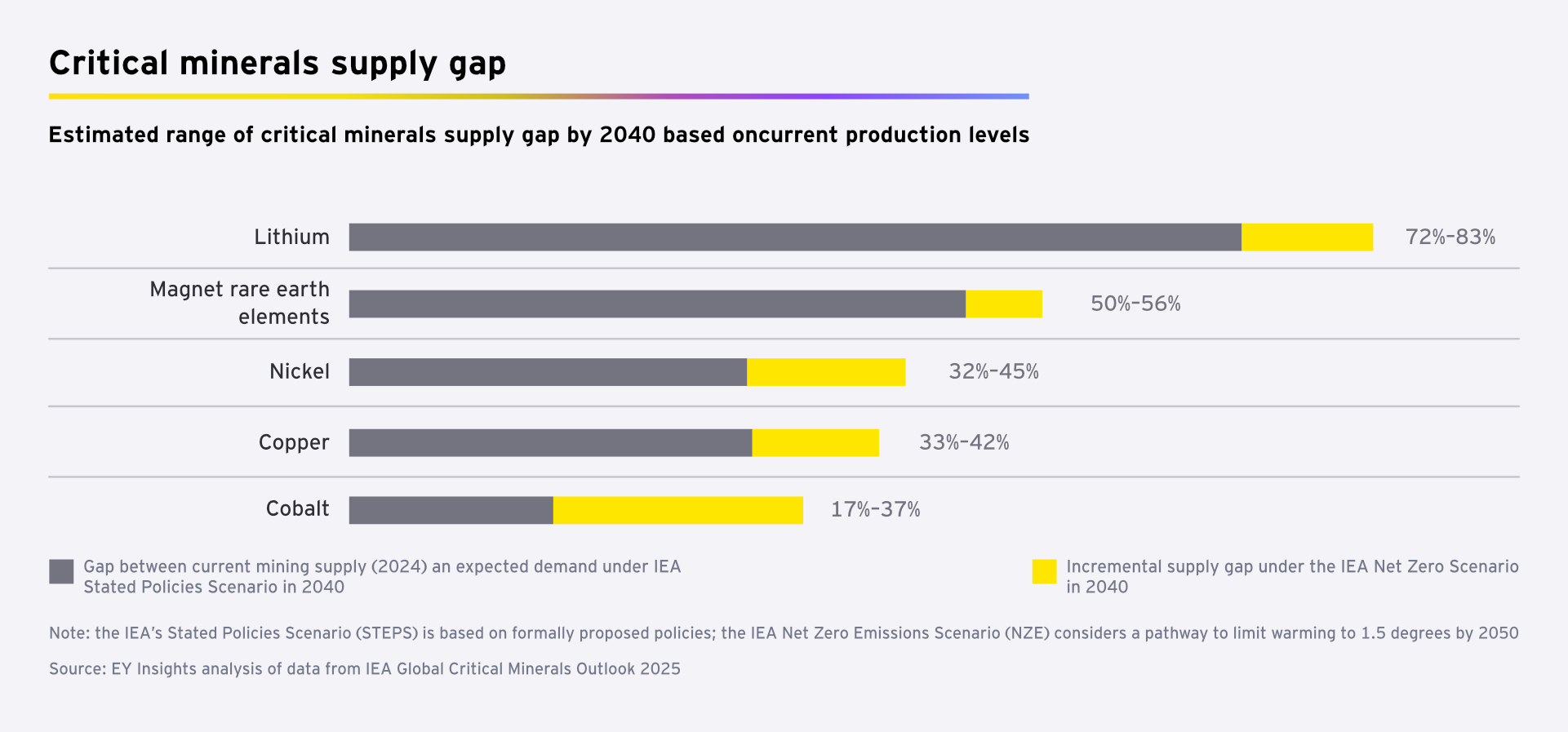
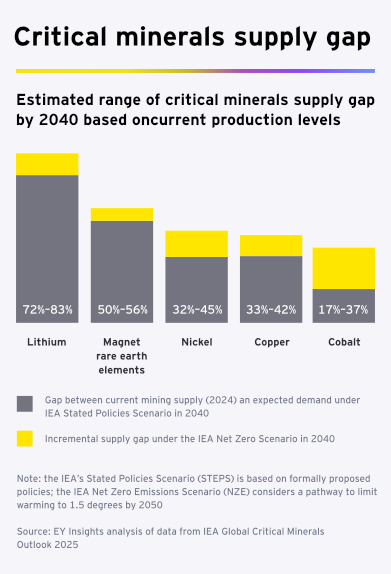
This shift is reshaping the significance of Uzbekistan's resource base. The country is among the world's leading gold producers, remains a major uranium supplier, and possesses significant copper reserves. Copper is becoming one of the foundational materials of both the digital economy and the energy transition.
For investors, the key question is increasingly not only how much a country can produce but also how effectively it can integrate into new value chains built around critical resources.
Copper is essential for power grids, data centres, batteries, solar parks, and wind farms. As electrification and computing capacity expand globally, demand for the metal continues to rise. For resource-rich countries, this creates opportunities not only in extraction but also in downstream processing and industrial development.
The greatest future shortage is not capital but talent
Perhaps the most important conclusion from EY's analysis concerns human capital.
As populations age across developed economies, talent shortages are becoming one of the primary constraints on economic growth. EY highlights that demographic trends across OECD countries will continue to place pressure on labour markets, making the ability to attract, integrate, and retain skilled workers an increasingly important source of national competitiveness.
As this unfolds, AI, digital infrastructure, and emerging industries are driving demand for specialists in data science, software development, cybersecurity, engineering, and complex systems management.
EY also notes that shortages of digital and engineering skills are becoming one of the main barriers to scaling artificial intelligence. Investment in education and workforce development is therefore becoming just as important as investment in infrastructure.
Against this backdrop, Uzbekistan's demographic profile represents a significant economic asset.
The country's population is expected to reach approximately 38.2 million in 2026. Nevertheless, the real advantage lies not simply in population size but in the ability to develop the talent needed for future industries. This is why investments in education, digital capabilities, and engineering skills are increasingly evolving from social policy priorities into core elements of long-term economic strategy.
A new stage of development
One of the most important conclusions from EY's megatrends analysis is that artificial intelligence, the energy transition, competition for critical resources, and the global race for talent can no longer be viewed as separate developments. They are becoming part of a single economic system in which change in one area rapidly influences all others.
Given these trends, Uzbekistan looks significantly different from how it did just a few years ago. Over the past decade, the country has consistently invested in sectors that now sit at the centre of global transformation: energy modernisation, digital infrastructure, international investment attraction, and the development of new industries.
What is also important is that these are no longer plans or policy ambitions. Major projects in energy, digital infrastructure, and advanced technologies are already being implemented, while investment volumes demonstrate that international capital increasingly views Uzbekistan as an important part of broader economic shifts across Eurasia.
At its core, this means that the megatrends EY associates with the future economy are already becoming part of Uzbekistan's economic reality. The most compelling question today is no longer whether Uzbekistan can integrate into the new global economy. The more intriguing question is what role the country will choose to play within it over the next decade.